Startup India Registration Benefits – Complete Guide for Indian Startups
Startup India Registration 2026: Complete Guide – Eligibility, Benefits aur Registration Process
🚨 कानूनी अस्वीकरण (Legal Disclaimer)
यह लेख केवल सूचनात्मक और शैक्षिक उद्देश्यों के लिए है। यह DPIIT के तहत Startup India रजिस्ट्रेशन का एक सामान्य अवलोकन प्रदान करता है, जो 2026 तक लागू प्रावधानों और 2026 के संशोधित फ्रेमवर्क पर आधारित है। सरकारी नियम, योजनाएं और पात्रता मानदंड बिना किसी पूर्व सूचना के बदल सकते हैं। यह सामग्री पेशेवर कानूनी या व्यावसायिक सलाह का विकल्प नहीं है। उद्यमियों को अपनी विशिष्ट स्थिति के अनुरूप सलाह के लिए एक योग्य चार्टर्ड अकाउंटेंट या कानूनी व्यवसायी से परामर्श करना चाहिए।
1. एक रियल कहानी से शुरुआत (A Real Story to Begin)
विवेक ने अपना स्टार्टअप स्टार्ट तो कर लिया था, प्रोडक्ट भी अच्छा चल रहा था। लेकिन जब टैक्स एक्सेम्प्शन, फंडिंग और गवर्नमेंट स्कीम्स की बात आई, तब उसे पता चला कि सिर्फ बिजनेस स्टार्ट करना काफी नहीं होता। उसके मेंटर ने बस एक लाइन बोली: “Startup India में रजिस्टर किया है?”
यहीं से विवेक का परस्पेक्टिव बदला।
ग्राउंड रियलिटी: आज भारत में तीसरे सबसे बड़े स्टार्टअप इकोसिस्टम में, DPIIT रिकग्निशन सिर्फ एक सरकारी प्रमाणपत्र नहीं है। यह वह चाबी है जो टैक्स सेविंग, फंडिंग, और सरकारी सपोर्ट के दरवाजे खोलती है। 2026 में इस फ्रेमवर्क को और मजबूत किया गया है।
2. स्टार्टअप इंडिया क्या है? (What is Startup India?)
स्टार्टअप इंडिया Government of India का एक फ्लैगशिप इनिशिएटिव है जिसका उद्देश्य इनोवेशन को बढ़ावा देना, स्टार्टअप्स को कानूनी और वित्तीय सहायता देना, और बिजनेस करने की आसानी (Ease of Doing Business) में सुधार करना है।
इस इनिशिएटिव के तहत जो स्टार्टअप्स एलिजिबल होते हैं, उन्हें DPIIT रिकग्निशन (Department for Promotion of Industry and Internal Trade) मिलता है। यह सबसे इम्पॉर्टेंट स्टेप है क्योंकि इसी रिकग्निशन के बाद आपको सरकारी बेनिफिट्स मिलते हैं।
2026 में बड़ा बदलाव: सरकार ने स्टार्टअप रिकग्निशन के नियमों को रिवाइज किया है। अब Deep Tech Startups के लिए एक नई कैटेगरी बनाई गई है, जिसमें उम्र की सीमा 20 साल और टर्नओवर की सीमा ₹300 करोड़ कर दी गई है। साथ ही, सहकारी समितियां (Cooperative Societies) भी अब एलिजिबल हो गई हैं।
3. स्टार्टअप इंडिया रजिस्ट्रेशन कौन कर सकता है? (Eligibility Criteria for Startup India Registration)
2026 में DPIIT रिकग्निशन के लिए योग्यता के नियमों में बदलाव हुए हैं। एक बिजनेस तभी एलिजिबल है जब वह निम्नलिखित शर्तों को पूरा करता है:
| मापदंड | विवरण |
|---|---|
| कंपनी का प्रकार | प्राइवेट लिमिटेड, LLP, पार्टनरशिप फर्म, या अब को-ऑपरेटिव सोसाइटी (State/Central) हो |
| कंपनी की उम्र | इनकॉर्पोरेशन की तारीख से 10 साल से कम (Deep Tech के लिए 20 साल) |
| सालाना टर्नओवर | किसी भी वित्तीय वर्ष में ₹200 करोड़ से अधिक न हो (पहले ₹100 करोड़ था) |
| बिजनेस नेचर | इनोवेटिव हो, प्रोडक्ट्स/सर्विसेज में सुधार करता हो, या स्केलेबल हो |
| एग्जिस्टिंग बिजनेस | किसी पुराने बिजनेस को स्प्लिट या रीकंस्ट्रक्ट करके नहीं बना हो |
कौन एलिजिबल नहीं है?
- सोल प्रोप्राइटरशिप (एलिजिबल नहीं है)
- 10 साल से अधिक पुरानी कंपनियां
- टर्नओवर ₹200 करोड़ से अधिक वाली कंपनियां
- ऐसे बिजनेस जिनमें इनोवेशन का स्कोप नहीं है
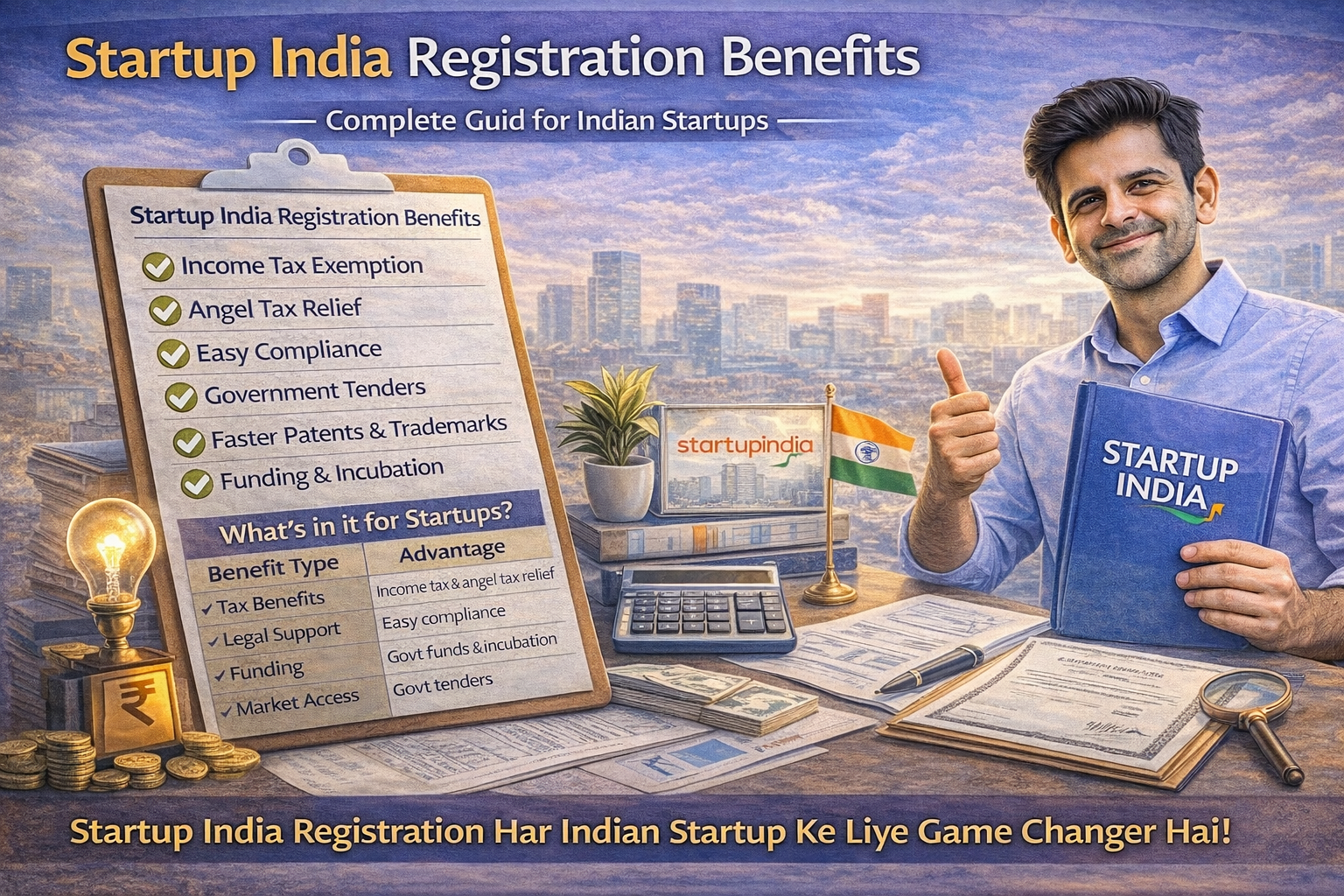
4. स्टार्टअप इंडिया रजिस्ट्रेशन के बेनिफिट्स (Benefits of Startup India Registration)
DPIIT रिकग्नाइज्ड स्टार्टअप्स को कई सारे बेनिफिट्स मिलते हैं:
| बेनिफिट कैटेगरी | विवरण |
|---|---|
| इनकम टैक्स एक्सेम्प्शन (80-IAC) | 10 साल में से किन्हीं भी 3 लगातार वित्तीय वर्षों के लिए 100% टैक्स छूट |
| एंजल टैक्स में राहत (Section 56) | DPIIT रिकग्नाइज्ड स्टार्टअप्स को एंजल टैक्स (Angel Tax) से छूट मिल सकती है |
| सेल्फ-सर्टिफिकेशन | 6 लेबर लॉ और 3 एनवायरनमेंट लॉ के तहत सेल्फ-सर्टिफिकेशन, 5 साल तक इंस्पेक्शन नहीं |
| फास्ट-ट्रैक पेटेंट/ट्रेडमार्क | पेटेंट फाइलिंग में 80% तक की फीस छूट, फास्ट-ट्रैक एग्जामिनेशन |
| सरकारी टेंडर में प्राथमिकता | Earnest Money Deposit (EMD) से छूट, प्रायर एक्सपीरियंस की शर्त से छूट |
| फंडिंग सपोर्ट | Startup India Seed Fund Scheme (SISFS) और Fund of Funds के तहत फंडिंग |
| आसान विंडिंग अप | IBC, 2016 के तहत 90 दिनों में आसानी से बिजनेस बंद करने की प्रक्रिया |
नोट: टैक्स बेनिफिट्स (80-IAC) केवल प्राइवेट लिमिटेड और LLP के लिए हैं, पार्टनरशिप फर्म के लिए नहीं।
5. स्टार्टअप इंडिया रजिस्ट्रेशन का प्रोसेस – स्टेप बाय स्टेप (Registration Process – Step by Step)
पूरी प्रक्रिया National Single Window System (NSWS) पर ऑनलाइन होती है और कोई शुल्क नहीं है:
स्टेप 1: बिजनेस इनकॉर्पोरेट करें
आपका बिजनेस पहले से रजिस्टर्ड होना चाहिए – Pvt Ltd, LLP, या पार्टनरशिप फर्म।
स्टेप 2: NSWS पर अकाउंट बनाएं
NSWS पोर्टल (nsws.gov.in) पर जाएं और अकाउंट बनाएं।
स्टेप 3: “Registration as a Startup” फॉर्म ऐड करें
डैशबोर्ड पर “Add Approvals” > “Central Approvals” में जाकर “Registration as a Startup” ऐड करें।
स्टेप 4: फॉर्म भरें और डॉक्यूमेंट्स अपलोड करें
निम्नलिखित जानकारी भरें:
- कंपनी का नाम, CIN, इनकॉर्पोरेशन की तारीख
- बिजनेस का सेक्टर
- प्रोडक्ट/सर्विस की ब्रीफ डिस्क्रिप्शन
- इनोवेशन और स्केलेबिलिटी को साफ तौर पर समझाएं
आवश्यक दस्तावेज:
- सर्टिफिकेट ऑफ इनकॉर्पोरेशन
- बिजनेस आइडिया की ब्रीफ डिस्क्रिप्शन
- पिच डेक (वैकल्पिक लेकिन मददगार)
- डायरेक्टर्स/पार्टनर्स की लिस्ट
- फंडिंग डिटेल्स (अगर कोई है)
स्टेप 5: आवेदन सबमिट करें
सबमिट करने के बाद DPIIT आपके आवेदन की समीक्षा करता है। एप्रूवल में आमतौर पर 1-2 सप्ताह लगते हैं।
स्टेप 6: सर्टिफिकेट डाउनलोड करें
एप्रूवल के बाद आपको DPIIT रिकग्निशन सर्टिफिकेट मिलता है। इसके बाद आप टैक्स एक्सेम्प्शन और दूसरे बेनिफिट्स के लिए आवेदन कर सकते हैं。
6. स्टार्टअप इंडिया रिकग्निशन के बाद – पहले 100 दिन (First 100 Days After DPIIT Recognition)
DPIIT रिकग्निशन सिर्फ शुरुआत है। पहले 100 दिनों में ये स्टेप्स फॉलो करें:
| स्टेप | एक्शन |
|---|---|
| 1. बेनिफिट्स को समझें और अप्लाई करें | 80-IAC (टैक्स होलिडे) और एंजल टैक्स एक्सेम्प्शन के लिए फॉर्म भरें |
| 2. फंडिंग के लिए तैयारी करें | Startup India Seed Fund Scheme (SISFS) के लिए आवेदन करें, पिच डेक तैयार करें |
| 3. इनक्यूबेटर्स से जुड़ें | Startup India Hub पर प्रोफाइल कम्प्लीट करें, मेंटरशिप लें |
| 4. IP प्रोटेक्शन शुरू करें | पेटेंट/ट्रेडमार्क फाइल करें, फास्ट-ट्रैक प्रोसेस का फायदा उठाएं |
| 5. गवर्नमेंट e-Marketplace (GeM) पर रजिस्टर करें | सरकारी टेंडर में भाग लेने के लिए जरूरी |
80-IAC (टैक्स होलिडे) के लिए आवश्यक दस्तावेज:
- शेयरहोल्डिंग डिटेल्स
- बोर्ड रेजोल्यूशन की कॉपी
- पिछले 3 साल के ITR और ऑडिटेड फाइनेंशियल स्टेटमेंट्स
- CA से सर्टिफिकेशन (इनकॉर्पोरेशन और स्केलेबिलिटी के लिए)
- पिच डेक, वेबसाइट URL
7. अक्सर पूछे जाने वाले सवाल (FAQs)
प्रश्न 1: क्या स्टार्टअप इंडिया रजिस्ट्रेशन के लिए कोई फीस है?
उत्तर: नहीं, DPIIT रिकग्निशन के लिए कोई फीस नहीं है। हालांकि, कंपनी इनकॉर्पोरेशन के लिए सरकारी फीस अलग से लगती है।
प्रश्न 2: क्या विदेशी कंपनी स्टार्टअप इंडिया रजिस्ट्रेशन कर सकती है?
उत्तर: हां, अगर वह भारत में प्राइवेट लिमिटेड, LLP, या पार्टनरशिप फर्म के रूप में रजिस्टर्ड है और सभी एलिजिबिलिटी क्राइटेरिया पूरे करती है।
प्रश्न 3: क्या सोल प्रोप्राइटरशिप स्टार्टअप इंडिया रजिस्टर कर सकती है?
उत्तर: नहीं, सोल प्रोप्राइटरशिप एलिजिबल नहीं है। आपको Pvt Ltd, LLP, या पार्टनरशिप फर्म बनाना होगा।
प्रश्न 4: क्या स्टार्टअप इंडिया रजिस्ट्रेशन के बाद ऑडिट होता है?
उत्तर: हां, टैक्स बेनिफिट्स (80-IAC) के लिए इंटर-मिनिस्टीरियल बोर्ड (IMB) एप्लीकेशन का इवैल्यूएशन करता है। रिकग्निशन के लिए सीधा ऑडिट नहीं है, लेकिन गलत जानकारी देने पर रिकग्निशन रिवोक किया जा सकता है।
प्रश्न 5: क्या पुराना बिजनेस स्टार्टअप इंडिया रजिस्ट्रेशन कर सकता है?
उत्तर: हां, अगर वह 10 साल से पुराना नहीं है, टर्नओवर ₹200 करोड़ से कम है, और इनोवेशन/स्केलेबिलिटी के मापदंड पूरे करता है।
प्रश्न 6: क्या स्टार्टअप इंडिया रजिस्ट्रेशन से GST छूट मिलती है?
उत्तर: नहीं, DPIIT रिकग्निशन से सीधे GST छूट नहीं मिलती। यह सिर्फ इनकम टैक्स (80-IAC) और एंजल टैक्स (Section 56) से संबंधित है।
8. क्विक चेकलिस्ट (Quick Checklist)
रजिस्ट्रेशन से पहले:
- [ ] कंपनी Pvt Ltd, LLP, या पार्टनरशिप फर्म के रूप में रजिस्टर्ड है
- [ ] इनकॉर्पोरेशन को 10 साल से कम हुए हैं (Deep Tech के लिए 20 साल)
- [ ] टर्नओवर किसी भी साल ₹200 करोड़ से अधिक नहीं है
- [ ] बिजनेस इनोवेटिव और स्केलेबल है
रजिस्ट्रेशन के दौरान:
- [ ] NSWS पोर्टल पर अकाउंट बनाया है
- [ ] “Registration as a Startup” फॉर्म भरा है
- [ ] सीओआई, बिजनेस डिस्क्रिप्शन, पिच डेक अपलोड किया है
रजिस्ट्रेशन के बाद (पहले 100 दिन):
- [ ] 80-IAC (टैक्स होलिडे) के लिए आवेदन किया है
- [ ] एंजल टैक्स एक्सेम्प्शन के लिए आवेदन किया है (अगर जरूरत हो)
- [ ] GeM पोर्टल पर रजिस्टर किया है
- [ ] पेटेंट/ट्रेडमार्क फाइल करने की प्रोसेस शुरू की है
- [ ] SISFS फंडिंग के लिए आवेदन किया है (अगर एलिजिबल हो)
9. फाइनल निष्कर्ष (Final Conclusion)
स्टार्टअप इंडिया रजिस्ट्रेशन सिर्फ एक सरकारी फॉर्म नहीं है, बल्कि भारतीय स्टार्टअप इकोसिस्टम का एंट्री गेट है। 2026 के नए रिवाइज्ड फ्रेमवर्क ने इसे और भी ज्यादा फ्लेक्सिबल और इंक्लूसिव बना दिया है।
जो फाउंडर्स शुरुआत में ही इसे स्ट्रैटेजिकली यूज करते हैं, उनका ग्रोथ पाथ ज्यादा स्मूथ होता है।
विवेक के लिए यह सिर्फ रजिस्ट्रेशन नहीं था, बल्कि एक टर्निंग पॉइंट था।
मुख्य बातें (Key Takeaways):
- DPIIT रिकग्निशन = सरकारी बेनिफिट्स की चाबी – टैक्स छूट, फंडिंग, और सरकारी टेंडर के लिए यह जरूरी है
- 2026 में नियम बदले हैं – टर्नओवर लिमिट बढ़कर ₹200 करोड़ हो गई है, Deep Tech के लिए अलग कैटेगरी है
- रजिस्ट्रेशन पूरी तरह फ्री है – कोई फीस नहीं है
- सिर्फ रजिस्ट्रेशन से टैक्स छूट नहीं मिलती – 80-IAC के लिए अलग से आवेदन करना होता है
- सेल्फ-सर्टिफिकेशन और कम इंस्पेक्शन – कंप्लायंस का बोझ कम होता है
जो फाउंडर्स शुरुआत में ही इस रजिस्ट्रेशन को कर लेते हैं और उसके बाद टैक्स बेनिफिट्स, फंडिंग और सरकारी टेंडर के लिए एक्टिवली अप्लाई करते हैं, उनका स्टार्टअप जर्नी बहुत आसान हो जाता है।
🚨 कानूनी अस्वीकरण (Legal Disclaimer)
यह लेख केवल सूचनात्मक और शैक्षिक उद्देश्यों के लिए है। यह DPIIT के तहत Startup India रजिस्ट्रेशन का एक सामान्य अवलोकन प्रदान करता है, जो 2026 तक लागू प्रावधानों और 2026 के संशोधित फ्रेमवर्क पर आधारित है। सरकारी नियम, योजनाएं और पात्रता मानदंड बिना किसी पूर्व सूचना के बदल सकती हैं। यह सामग्री पेशेवर कानूनी या व्यावसायिक सलाह का विकल्प नहीं है। उद्यमियों को अपनी विशिष्ट स्थिति के अनुरूप सलाह के लिए एक योग्य चार्टर्ड अकाउंटेंट या कानूनी व्यवसायी से परामर्श करना चाहिए और सबसे वर्तमान कानूनी स्थिति के लिए आधिकारिक Startup India पोर्टल और सरकारी अधिसूचनाओं का संदर्भ लेना चाहिए।

Vivek Bhargava is a business and legal content researcher who writes simplified guides on Indian startup laws, taxation, and compliance requirements. His goal is to help entrepreneurs understand complex legal topics in a clear and practical way.
The information published on this website is based on official government notifications and publicly available legal resources.
Disclaimer: The content provided here is for informational purposes only and does not constitute legal advice. Readers are advised to consult a qualified professional for specific legal matters.