
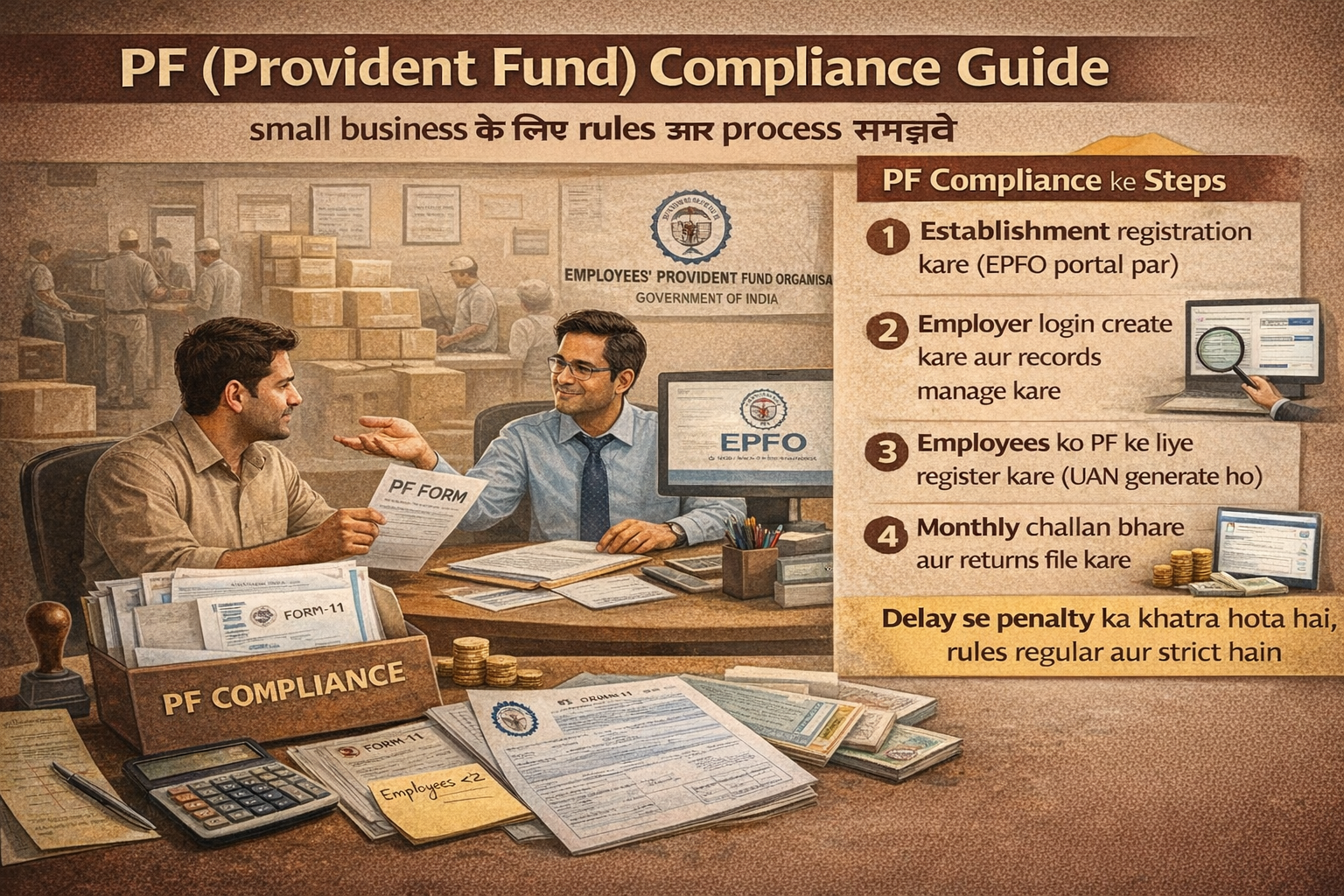
PF (Provident Fund) Compliance Guide – Small Business ke liye Practical Samajh
PF Compliance Guide 2026: Small Business ke liye Practical Rules, Contributions aur Registration
🚨 कानूनी अस्वीकरण (Legal Disclaimer)
यह लेख केवल सूचनात्मक और शैक्षिक उद्देश्यों के लिए है। यह Employees’ Provident Funds & Miscellaneous Provisions Act, 1952 के तहत PF अनुपालन का एक सामान्य अवलोकन प्रदान करता है, जो 2026 तक लागू प्रावधानों पर आधारित है। कानून, नियम, योगदान दरें और प्रवर्तन प्राथमिकताएं बिना किसी पूर्व सूचना के बदल सकती हैं। यह सामग्री पेशेवर कानूनी या वित्तीय सलाह का विकल्प नहीं है। व्यवसायियों को अपनी विशिष्ट स्थिति के अनुरूप सलाह के लिए एक योग्य चार्टर्ड अकाउंटेंट या पेरोल कंसल्टेंट से परामर्श करना चाहिए।
1. एक रियल सिचुएशन जो बहुत कॉमन है (A Real Situation Many Face)
मनोज गाजियाबाद में एक स्मॉल पैकेजिंग यूनिट चलाता है। शुरू में उसके पास 6 वर्कर्स थे, सब डेली वेज पर काम करते थे। धीरे-धीरे काम बढ़ा और स्टाफ 15 लोग हो गया।
एक दिन एक पुराना एम्प्लॉयी बोला, “सर, PF काट रहे हो क्या?”
मनोज को तब पता चला कि 10 से ज्यादा एम्प्लॉयीज होने पर PF रूल्स अप्लाई हो सकते हैं। अकाउंटेंट ने बोला रजिस्टर करना पड़ेगा, वरना फ्यूचर में पेनल्टी आ सकती है।
मनोज को लगा PF सिर्फ बड़ी फैक्ट्रियों के लिए होता है। पर रियलिटी में बहुत स्मॉल बिजनेस को PF कंप्लायंस करना पड़ता है, और कन्फ्यूजन भी वहीं से शुरू होता है .
2. PF Compliance को लेकर स्मॉल बिजनेस को प्रॉब्लम क्यों होती है (Why Small Businesses Struggle with PF Compliance)
ग्राउंड रियलिटी में PF एक ऐसा एरिया है जहां लोगों को क्लैरिटी कम होती है।
कॉमन प्रॉब्लम्स:
| प्रॉब्लम | विवरण |
|---|---|
| एम्प्लॉयीज टेम्परेरी होते हैं | डेली वेज, कॉन्ट्रैक्ट बेसिस पर काम करने वाले, इसलिए एम्प्लॉयर इग्नोर कर देता है |
| सैलरी स्ट्रक्चर क्लियर नहीं होता | बेसिक और अलाउंसेज में डिस्टिंक्शन नहीं होता |
| अकाउंटेंट भी कभी लेट बताता है | PF अक्सर इग्नोर किया जाने वाला एरिया है |
| पोर्टल और चालान प्रोसेस टेक्निकल लगता है | EPFO पोर्टल का इंटरफेस शुरू में डराता है |
सबसे बड़ा इश्यू यह होता है कि लोग सोचते हैं जब तक नोटिस नहीं आता, तब तक कंप्लायंस जरूरी नहीं। पर PF डिपार्टमेंट का सिस्टम स्ट्रक्चर्ड होता है और डिले कॉस्टली हो सकती है .
3. सिंपल शब्दों में समझें: PF क्या होता है (What is PF – In Simple Words)
सिंपल शब्दों में बोलें तो:
प्रोविडेंट फंड (PF) एक रिटायरमेंट सेविंग स्कीम है जिसमें:
- एम्प्लॉयी की सैलरी का एक हिस्सा डिडक्ट होता है
- एम्प्लॉयर भी उतना ही कंट्रीब्यूट करता है
- यह अमाउंट एम्प्लॉयी के PF अकाउंट में जमा होता है
यह पैसा लॉन्ग टर्म सेविंग होता है जो जॉब चेंज या रिटायरमेंट पर मिलता है .
PF तीन स्कीम्स ऑपरेट करता है :
- EPF (Employees’ Provident Fund Scheme, 1952) – मुख्य बचत योजना
- EPS (Employees’ Pension Scheme, 1995) – पेंशन योजना
- EDLI (Employees’ Deposit Linked Insurance Scheme, 1976) – इंश्योरेंस कवर
4. PF किस पर एप्लिकेबल है – बेसिक रूल्स (Applicability of PF – Basic Rules)
4.1 मेंडेटरी रजिस्ट्रेशन (जरूरी)
| क्राइटेरिया | डिटेल |
|---|---|
| कर्मचारियों की संख्या | 20 या उससे अधिक एम्प्लॉयीज |
| कवरेज | फैक्ट्रियाँ और नोटिफाइड एस्टेब्लिशमेंट्स |
| एक्ट का दायरा | पूरे भारत में (जम्मू-कश्मीर को छोड़कर) |
| ब्रेड्थ | 187 क्लासेस ऑफ एस्टेब्लिशमेंट्स |
महत्वपूर्ण: एक बार एक्ट एप्लिकेबल हो जाए तो हमेशा एप्लिकेबल रहता है – भले ही बाद में एम्प्लॉयीज की संख्या 20 से कम हो जाए .
4.2 शाखाओं को शामिल करना (Branches Inclusion)
सेक्शन 2A के अनुसार, एस्टेब्लिशमेंट में उसकी सभी शाखाएं शामिल होती हैं। PF एप्लिकेबिलिटी के लिए सभी ब्रांचेज के एम्प्लॉयीज को जोड़ना होगा .
4.3 वालंटरी रजिस्ट्रेशन
अगर आपके पास 20 से कम एम्प्लॉयीज हैं, तो आप वालंटरी तौर पर भी PF रजिस्टर कर सकते हैं। 2026 में कई स्टार्टअप्स और SMEs यह कर रहे हैं क्योंकि :
- टैलेंट अट्रैक्ट करना है
- क्रेडिबिलिटी बढ़ानी है
- बड़े क्लाइंट्स के लिए जरूरी है
5. एम्प्लॉयीज की एलिजिबिलिटी – किन एम्प्लॉयीज पर PF लगता है (Employee Eligibility – Who is Covered)
5.1 “एम्प्लॉयी” की डेफिनिशन (सेक्शन 2F)
“एम्प्लॉयी” में शामिल हैं:
- कोई भी व्यक्ति जो काम के बदले वेजेज लेता है (मैन्युअल या ऑफिस वर्क)
- कॉन्ट्रैक्टर के जरिए काम करने वाले एम्प्लॉयीज
- अप्रेंटिस (अप्रेंटिस एक्ट, 1961 के तहत नहीं आने वाले)
5.2 सैलरी लिमिट
| पैरामीटर | डिटेल |
|---|---|
| “पे” की डेफिनिशन | बेसिक वेजेज + डियरनेस अलाउंस + रिटेनिंग अलाउंस (अगर हो) + फूड कंसेशन का कैश वैल्यू |
| मेंडेटरी कवरेज | ₹15,000 प्रति माह या उससे कम कमाने वाले एम्प्लॉयीज पर PF लगना अनिवार्य है |
| वालंटरी कवरेज | ₹15,000 से अधिक कमाने वाले एम्प्लॉयीज को भी कवर किया जा सकता है, अगर एम्प्लॉयर चाहे और एम्प्लॉयी राजी हो |
5.3 EPS (पेंशन) की सीमा
EPS कंट्रीब्यूशन सिर्फ अधिकतम ₹15,000 प्रति माह पर कैलकुलेट होता है। इसलिए:
- भले ही बेसिक सैलरी ₹25,000 हो, EPS पोर्शन सिर्फ ₹15,000 पर कैलकुलेट होगा
- EPS कंट्रीब्यूशन ₹1,250 प्रति माह (8.33% of ₹15,000) तक सीमित है
6. PF कंट्रीब्यूशन स्ट्रक्चर – कितना कटेगा? (PF Contribution Structure – How Much is Deducted?)
6.1 नॉर्मल केस (12% की दर)
| कंपोनेंट | प्रतिशत | कहां जाता है |
|---|---|---|
| एम्प्लॉयी कंट्रीब्यूशन | 12% | पूरा EPF में |
| एम्प्लॉयर कंट्रीब्यूशन | 12% | 3.67% EPF + 8.33% EPS |
उदाहरण (बेसिक + DA = ₹20,000) :
- एम्प्लॉयी कंट्रीब्यूशन: ₹2,400 (12%)
- एम्प्लॉयर कंट्रीब्यूशन (कुल 12%): ₹2,400
- EPS में (8.33%): ₹1,250 (कैप की वजह से)
- EPF में (3.67%): ₹1,150
- कुल EPF में जमा: ₹2,400 + ₹1,150 = ₹3,550 प्रति माह
6.2 स्पेशल केस – 10% की दर
10% की दर उन ऑर्गनाइजेशन पर लागू होती है जहां:
- एम्प्लॉयीज की संख्या 20 से कम हो
- या सिक यूनिट (BIFR द्वारा डिफाइंड)
- या स्पेसिफिक इंडस्ट्रीज (जैसे बीड़ी, जूट, ईंट, ग्वार गम, कॉयर)
6.3 एडमिनिस्ट्रेटिव चार्जेज
एम्प्लॉयर को अतिरिक्त भुगतान करना होता है:
- EPF एडमिन चार्ज: 1.1% (बेसिक + DA पर)
- EDLI एडमिन चार्ज: 0.01% (बेसिक + DA पर)
- EDLI कंट्रीब्यूशन: 0.5% (बेसिक + DA पर)
कुल एम्प्लॉयर का आउटफ्लो: लगभग 13.61% (12% EPF/EPS + 1.1% + 0.01% + 0.5%) .
7. PF पर इंटरेस्ट – कितना मिलता है? (Interest on PF – How Much?)
| फाइनेंशियल ईयर | इंटरेस्ट रेट |
|---|---|
| 2024-25 | 8.25% प्रति वर्ष |
| 2023-24 | 8.25% |
| 2022-23 | 8.15% |
| 2021-22 | 8.10% |
इंटरेस्ट कैलकुलेशन का तरीका :
- इंटरेस्ट मंथली रनिंग बैलेंस पर कैलकुलेट होता है
- साल के अंत में अकाउंट में क्रेडिट होता है
- पहले महीने (ज्वाइनिंग के महीने) पर इंटरेस्ट नहीं मिलता
8. PF रजिस्ट्रेशन का प्रोसेस – स्टेप बाय स्टेप (PF Registration Process – Step by Step)
स्टेप 1: एस्टेब्लिशमेंट की जरूरतें समझें
- चेक करें कि एम्प्लॉयीज की संख्या 20 है या नहीं
- अगर हां, तो रजिस्ट्रेशन अनिवार्य है
स्टेप 2: डिजिटल सिग्नेचर सर्टिफिकेट (DSC) लें
- क्लास 3 DSC लेना होता है
- ऑथोराइज्ड सिग्नेटरी के नाम पर होना चाहिए
स्टेप 3: श्रम सुविधा पोर्टल पर रजिस्टर करें
- EPFO यूनिफाइड पोर्टल पर एस्टेब्लिशमेंट रजिस्टर करें
- PAN और ऑथोराइज्ड सिग्नेटरी के आधार की जरूरत होगी
स्टेप 4: डॉक्यूमेंट्स अपलोड करें
- कंपनी का PAN कार्ड
- एड्रेस प्रूफ (रेंट एग्रीमेंट / यूटिलिटी बिल)
- पार्टनरशिप डीड / MOA (जैसा लागू हो)
- कैंसल्ड चेक
- एम्प्लॉयीज की डिटेल्स
स्टेप 5: एस्टेब्लिशमेंट कोड प्राप्त करें
- अप्रूवल के बाद यूनिक एस्टेब्लिशमेंट कोड मिलता है
- यह कोड PF कंप्लायंस के लिए जरूरी है
स्टेप 6: एम्प्लॉयीज को UAN दें
- हर एम्प्लॉयी के लिए UAN (Universal Account Number) जनरेट होता है
- नए एम्प्लॉयीज के लिए आधार सीडिंग जरूरी है
9. PF कंप्लायंस के लिए जरूरी डॉक्यूमेंट्स (Documents Required for PF Compliance)
| डॉक्यूमेंट | कब जरूरी है |
|---|---|
| कंपनी का PAN | रजिस्ट्रेशन के समय |
| एड्रेस प्रूफ | बिजली बिल, रेंट एग्रीमेंट, या प्रॉपर्टी पेपर्स |
| MOA / पार्टनरशिप डीड | बिजनेस स्ट्रक्चर के हिसाब से |
| बैंक की कैंसल्ड चेक / पासबुक कॉपी | कंपनी के बैंक अकाउंट की |
| ऑथोराइज्ड सिग्नेटरी का आधार और PAN | DSC और रजिस्ट्रेशन के लिए |
| एम्प्लॉयीज की लिस्ट | नाम, डीओबी, जॉइनिंग डेट, सैलरी डिटेल्स के साथ |
| एम्प्लॉयीज का आधार | UAN जनरेशन और सीडिंग के लिए |
10. मंथली PF कंप्लायंस – हर महीने क्या करना है (Monthly PF Compliance – What to Do Every Month)
| एक्टिविटी | डेडलाइन | डिटेल |
|---|---|---|
| PF कंट्रीब्यूशन कैलकुलेट करें | हर महीने की 1-10 तारीख | सैलरी के हिसाब से एम्प्लॉयी और एम्प्लॉयर दोनों का हिसाब लगाएं |
| ECR (Electronic Challan cum Return) फाइल करें | हर महीने की 15 तारीख तक | EPFO पोर्टल पर ECR 2.0 फाइल करना है |
| PF पेमेंट करें | हर महीने की 15 तारीख तक | ऑनलाइन चालान बनाकर पेमेंट करें |
| एडमिन चार्जेज पे करें | हर महीने की 15 तारीख तक | 1.1% + 0.01% + 0.5% एडिशनल पेमेंट |
| नए एम्प्लॉयीज को PF में ऐड करें | जॉइनिंग के तुरंत बाद | UAN जनरेट करें और लिंक करें |
महत्वपूर्ण: 2026 में EPFO का ऑटोमेटेड सिस्टम 24 घंटे की देरी पर भी डैमेजेज और इंटरेस्ट कैलकुलेट कर लेता है .
11. PF नॉन-कंप्लायंस की पेनल्टी (Penalties for PF Non-Compliance)
सेक्शन 14 के तहत :
| गैर-अनुपालन का प्रकार | पेनल्टी / परिणाम |
|---|---|
| डिले इन पेमेंट | इंटरेस्ट और डैमेजेज लगते हैं (सेक्शन 7Q) |
| डिले इन रजिस्ट्रेशन | रेट्रोस्पेक्टिव लायबिलिटी + पेनल्टी |
| फाइलिंग में एरर | नोटिस, क्लैरिफिकेशन, पेनल्टी |
| इनकरेक्ट डेटा (नाम, DOB मिसमैच) | ECR रिजेक्ट हो सकता है |
| लगातार डिफॉल्ट | जांच, कानूनी कार्रवाई, प्रोसेक्यूशन |
2026 का अपडेट: GSTN और EPFO के बीच इंटर-डिपार्टमेंटल डेटा शेयरिंग से ऑटोमेटेड अलर्ट्स आने लगे हैं .
12. PF Compliance के प्रोस और कॉन्स – रियल व्यू (Pros and Cons of PF Compliance)
प्रोस (फायदे):
| फायदा | विवरण |
|---|---|
| एम्प्लॉयी ट्रस्ट बढ़ता है | एम्प्लॉयीज को लगता है कि एम्प्लॉयर उनके भविष्य की सोच रहा है |
| रिटेंशन बेहतर होता है | PF देने वाले बिजनेस में लोग टिकना चाहते हैं |
| क्रेडिबिलिटी बढ़ती है | सरकारी टेंडर, बड़े क्लाइंट्स, फैक्ट्री इंस्पेक्शन में PF कंप्लायंस चेक होता है |
| कानूनी सुरक्षा | नोटिस और पेनल्टी का डर खत्म |
कॉन्स (नुकसान):
| नुकसान | विवरण |
|---|---|
| कॉस्ट बढ़ जाती है | एम्प्लॉयर को 13.61% एक्स्ट्रा भुगतान करना पड़ता है |
| पेपरवर्क और डिसिप्लिन | हर महीने फाइलिंग, चालान, रिकॉर्ड मेंटेनेंस – समय और मेहनत लगती है |
| पोर्टल का झंझट | EPFO पोर्टल शुरू में डराता है, UAN, ECR, डिजिटल सिग्नेचर – सब सीखना पड़ता है |
शॉर्ट टर्म में बोझ लगता है, लॉन्ग टर्म में स्ट्रक्चर बन जाता है।
13. कब PF Compliance को सीरियस लेना चाहिए (When to Take PF Compliance Seriously)
| सिचुएशन | क्यों जरूरी है |
|---|---|
| एम्प्लॉयीज की संख्या 15-20 के आसपास हो | कानूनी लिमिट क्रॉस होने वाली है |
| फैक्ट्री या यूनिट रजिस्टर्ड हो | PF डिपार्टमेंट इंडस्ट्रियल एरियाज पर फोकस करता है |
| बड़ी कंपनियों या कॉन्ट्रैक्टर्स के साथ काम हो | वेडर कंप्लायंस में PF चेक होता है |
| जीएसटी रजिस्टर्ड बिजनेस हो | GSTN और EPFO के बीच डेटा शेयरिंग होती है |
शॉर्ट कॉशन: PF लायबिलिटी रेट्रोस्पेक्टिव भी कैलकुलेट हो सकती है . अगर आपने 2 साल तक रजिस्ट्रेशन नहीं किया और पकड़े गए, तो पूरे 2 साल का PF + इंटरेस्ट + डैमेजेज एक साथ डिमांड हो जाएगा – जो एक साथ हैवी अमाउंट बन जाता है।
14. कॉमन मिस्टेक्स जो बिजनेस करते हैं (Common Mistakes Businesses Make)
| मिस्टेक | परिणाम | सही तरीका |
|---|---|---|
| एम्प्लॉयीज को इन्फॉर्मल रखना | PF एप्लिकेबिलिटी कैलकुलेट नहीं हो पाती | हर एम्प्लॉयी का रिकॉर्ड रखें – चाहे डेली वेज हो |
| सैलरी ब्रेकअप अनरियलिस्टिक बनाना | EPFO असेसमेंट में एडजस्ट कर देगा | बेसिक कम से कम 50% ग्रॉस होना चाहिए |
| PF डिडक्शन तो किया, पर डिपॉजिट टाइम पर नहीं किया | इंटरेस्ट + डैमेजेज | 15 तारीख से पहले पेमेंट जरूर करें |
| ECR फाइल करते समय डेटा गलत भरना | रिजेक्शन, फिर से फाइल करना, डेट लगना | UAN प्रोफाइल से डेटा मैच करें |
| कॉन्ट्रैक्ट एम्प्लॉयीज पर PF इग्नोर करना | सेक्शन 2F के तहत कॉन्ट्रैक्टर के जरिए काम करने वाले भी एम्प्लॉयी हैं | सभी कॉन्ट्रैक्ट एम्प्लॉयीज को कवर करें |
ये मिस्टेक्स फ्यूचर में मेजर इश्यू बन सकती हैं।
15. अक्सर पूछे जाने वाले सवाल (FAQs)
प्रश्न 1: क्या टेम्परेरी एम्प्लॉयीज पर भी PF लगता है?
उत्तर: हां। सेक्शन 2F के अनुसार, “एम्प्लॉयी” की डेफिनिशन में टेम्परेरी और कॉन्ट्रैक्ट एम्प्लॉयीज भी आते हैं, बशर्ते वे मानदंड पूरा करते हों . टेम्परेरी या परमानेंट – फर्क नहीं पड़ता।
प्रश्न 2: क्या एम्प्लॉयी PF से ऑप्ट आउट कर सकता है?
उत्तर: नहीं। अगर एम्प्लॉयीज की संख्या 20 से अधिक है और एम्प्लॉयी की सैलरी ₹15,000 प्रति माह या उससे कम है, तो PF मेंबरशिप अनिवार्य है . सिर्फ उन्हीं केसेस में ऑप्ट-आउट पॉसिबल है जहां सैलरी ₹15,000 से अधिक हो और पहली बार ज्वाइन कर रहे हों।
प्रश्न 3: क्या PF न देने पर तुरंत पेनल्टी लगती है?
उत्तर: इनिशियल डिले पर इंटरेस्ट और डैमेजेज लगते हैं। लॉन्ग डिले पर इंस्पेक्शन और लीगल एक्शन तक सिचुएशन जा सकती है . 2026 में EPFO का ऑटोमेटेड सिस्टम 24 घंटे की देरी पर भी पेनल्टी कैलकुलेट कर लेता है .
प्रश्न 4: क्या ₹15,000 से अधिक सैलरी वालों को PF नहीं लगता?
उत्तर: रूल यह है कि PF एप्लिकेबिलिटी एस्टेब्लिशमेंट के लेवल पर तय होती है, एम्प्लॉयी के लेवल पर नहीं। अगर एस्टेब्लिशमेंट PF एक्ट के दायरे में आता है, तो सभी एम्प्लॉयीज कवर होते हैं – चाहे सैलरी कितनी भी हो .
प्रश्न 5: क्या PF कंप्लायंस के लिए प्रोफेशनल हेल्प लेना जरूरी है?
उत्तर: जरूरी नहीं है, लेकिन कई स्मॉल बिजनेस प्रोफेशनल हेल्प लेते हैं। पेरोल सॉफ्टवेयर और मैनेज्ड सर्विसेज प्रोवाइडर्स हैं जो ECR फाइलिंग, चालान पेमेंट और कंप्लायंस को ऑटोमेट कर देते हैं .
प्रश्न 6: क्या PF रजिस्ट्रेशन में कोई फीस है?
उत्तर: रजिस्ट्रेशन के लिए कोई डायरेक्ट फीस नहीं है, लेकिन हर महीने एम्प्लॉयीज की सैलरी पर कंट्रीब्यूशन देना होता है .
प्रश्न 7: क्या एक ही एम्प्लॉयी के दो PF अकाउंट हो सकते हैं?
उत्तर: नहीं। UAN (Universal Account Number) सिस्टम की वजह से एक एम्प्लॉयी का सिर्फ एक PF अकाउंट होता है। जॉब बदलने पर पुराने PF को नए एम्प्लॉयर के साथ ट्रांसफर करना होता है।
प्रश्न 8: क्या स्टाफ की संख्या 20 से कम होने पर PF से बाहर निकल सकते हैं?
उत्तर: नहीं। सेक्शन 2A के अनुसार, एक बार एक्ट एप्लिकेबल हो जाए तो हमेशा एप्लिकेबल रहता है – भले ही बाद में एम्प्लॉयीज की संख्या 20 से कम हो जाए .
16. क्विक चेकलिस्ट (Quick Checklist)
- [ ] क्या एम्प्लॉयीज की संख्या 20 या उससे अधिक है? (अगर हां, तो PF अनिवार्य है)
- [ ] अगर 20 से कम है, तो क्या बिजनेस वालंटरी रजिस्ट्रेशन का फैसला करना चाहता है?
- [ ] क्या बिजनेस नोटिफाइड कैटेगरी (187 क्लासेस) में आता है?
- [ ] क्या सभी एम्प्लॉयीज (जिनकी सैलरी ₹15,000/माह या उससे कम है) कवर हो गए हैं?
- [ ] क्या PF रजिस्ट्रेशन EPFO पोर्टल पर कर दिया गया है?
- [ ] क्या सभी एम्प्लॉयीज को UAN जनरेट/लिंक कर दिया गया है?
- [ ] क्या हर महीने 15 तारीख से पहले ECR फाइल हो रही है?
- [ ] क्या हर महीने 15 तारीख से पहले PF पेमेंट हो रही है?
- [ ] क्या एडमिन चार्जेज (1.1% + 0.01% + 0.5%) अलग से पे हो रहे हैं?
- [ ] क्या नए एम्प्लॉयीज जॉइन करते ही PF में ऐड हो रहे हैं?
- [ ] क्या एम्प्लॉयीज की UAN प्रोफाइल में आधार सीड हो गया है?
17. निष्कर्ष (Conclusion)
मनोज ने जब PF रजिस्ट्रेशन करवाया, तो शुरू में उसे कॉस्ट और पेपरवर्क हैवी लगा। पर 1 साल बाद उसने नोटिस किया कि एम्प्लॉयीज स्टेबल हो गए, और अकाउंटिंग और पेरोल सिस्टम ऑर्गनाइज्ड हो गया।
PF कंप्लायंस शुरू में कॉम्प्लिकेटेड लगता है, पर प्रोसेस समझ कर और मंथली डिसिप्लिन बना कर ईज़ीली मैनेज किया जा सकता है।
मुख्य बातें (Key Takeaways):
- 20 एम्प्लॉयीज की सीमा से सतर्क रहें – एक बार एक्ट एप्लिकेबल हुआ तो हमेशा एप्लिकेबल रहेगा
- सैलरी स्ट्रक्चर क्लियर रखें – बेसिक कम से कम 50% ग्रॉस होना चाहिए
- 15 तारीख की डेडलाइन हमेशा याद रखें – ऑटोमेटेड सिस्टम अब 24 घंटे की देरी पर भी पेनल्टी लगा देता है
- सभी एम्प्लॉयीज को कवर करें – टेम्परेरी, कॉन्ट्रैक्ट – कोई एक्सेप्शन नहीं
- EPFO पोर्टल और ECR फाइलिंग सीखें – या किसी प्रोफेशनल की मदद लें
- रेट्रोस्पेक्टिव लायबिलिटी से बचें – देरी पर पूरे पिछले पीरियड का PF एक साथ डिमांड हो सकता है
हर बिजनेस की सिचुएशन अलग होती है – एम्प्लॉयीज की संख्या, सैलरी स्ट्रक्चर, ग्रोथ प्लान – सब देख कर फैसला लेना प्रैक्टिकल अप्रोच होता है।
🚨 कानूनी अस्वीकरण (Legal Disclaimer)
यह लेख केवल सूचनात्मक और शैक्षिक उद्देश्यों के लिए है। यह Employees’ Provident Funds & Miscellaneous Provisions Act, 1952 के तहत PF अनुपालन का एक सामान्य अवलोकन प्रदान करता है, जो 2026 तक लागू प्रावधानों पर आधारित है। कानून, नियम, योगदान दरें, ब्याज दरें और प्रवर्तन प्राथमिकताएं बिना किसी पूर्व सूचना के बदल सकती हैं। यह सामग्री पेशेवर कानूनी या वित्तीय सलाह का विकल्प नहीं है। व्यवसायियों को अपनी विशिष्ट स्थिति के अनुरूप सलाह के लिए एक योग्य चार्टर्ड अकाउंटेंट या पेरोल कंसल्टेंट से परामर्श करना चाहिए और सबसे वर्तमान कानूनी स्थिति के लिए आधिकारिक EPFO पोर्टल (www.epfindia.gov.in) और अधिसूचनाओं का संदर्भ लेना चाहिए।

Vivek Bhargava is a business and legal content researcher who writes simplified guides on Indian startup laws, taxation, and compliance requirements. His goal is to help entrepreneurs understand complex legal topics in a clear and practical way.
The information published on this website is based on official government notifications and publicly available legal resources.
Disclaimer: The content provided here is for informational purposes only and does not constitute legal advice. Readers are advised to consult a qualified professional for specific legal matters.