Notice of Demand – How to Respond (Income Tax / GST Demand Notice ko Practical Tarike se Kaise Handle Kare)
Income Tax & GST Demand Notice Guide 2026 – Kab Aata Hai, Kaise Respond Karein aur Kya Na Karein
🚨 कानूनी अस्वीकरण (Legal Disclaimer)
यह लेख केवल सूचनात्मक और शैक्षिक उद्देश्यों के लिए है। यह Income Tax Act, 1961 और CGST Act, 2017 के तहत डिमांड नोटिस का एक सामान्य अवलोकन प्रदान करता है, जो 2026 तक लागू प्रावधानों पर आधारित है। कानून, नियम, समय-सीमाएं और प्रक्रियाएं बिना किसी पूर्व सूचना के बदल सकती हैं। यह सामग्री पेशेवर कानूनी या कर सलाह का विकल्प नहीं है। करदाताओं को अपनी विशिष्ट स्थिति के अनुरूप सलाह के लिए एक योग्य चार्टर्ड अकाउंटेंट या टैक्स कंसल्टेंट से परामर्श करना चाहिए।
1. एक रियल सिचुएशन जो बहुत लोग फेस करते हैं (A Real Situation Many People Face)
राकेश सूरत में एक स्मॉल टेक्सटाइल ट्रेडिंग का बिजनेस चलाता है। एक दिन उसके ईमेल पर एक मैसेज आया: “Demand Notice – Outstanding Tax Payable.”
ईमेल देखते ही राकेश को लगा कि शायद उसने कोई बड़ी गलती कर दी है। अमाउंट भी काफी बड़ा लग रहा था। अकाउंटेंट को कॉल किया, पर अकाउंटेंट बिजी था और बोला शाम को बात करते हैं। पूरा दिन राकेश टेंशन में रहा। उसे यह भी समझ नहीं आ रहा था कि डिमांड नोटिस का मतलब तुरंत पेमेंट करना होता है या पहले चेक करना चाहिए।
सच यह है कि नोटिस ऑफ डिमांड आना अनअसामान्य नहीं है, और हर डिमांड फाइनल या करेक्ट हो, यह जरूरी नहीं होता .
2. डिमांड नोटिस आने पर सबसे बड़ी प्रॉब्लम क्या होती है (The Biggest Problem When a Demand Notice Arrives)
ग्राउंड रियलिटी में बिजनेस ऑनर्स और इंडिविजुअल्स दोनों एक ही कन्फ्यूजन फेस करते हैं:
| प्रॉब्लम | विवरण |
|---|---|
| नोटिस की भाषा टेक्निकल होती है | कानूनी भाषा समझना आम आदमी के लिए मुश्किल है |
| अमाउंट देखकर पैनिक हो जाता है | बड़ी संख्या देखकर लोग घबरा जाते हैं |
| पोर्टल समझना मुश्किल लगता है | इनकम टैक्स या जीएसटी पोर्टल पर डिटेल्स ढूंढना आसान नहीं होता |
| अकाउंटेंट पर टोटल डिपेंडेंसी | हर चीज के लिए अकाउंटेंट पर निर्भर रहना |
सबसे कॉमन मिस्टेक: बिना समझे पेमेंट कर देना या नोटिस को पूरी तरह इग्नोर कर देना। दोनों ही सिचुएशन में लॉस हो सकता है।
3. नोटिस ऑफ डिमांड क्या होता है – सिंपल शब्दों में (What is a Notice of Demand – In Simple Words)
सिंपल शब्दों में बोलें तो:
नोटिस ऑफ डिमांड एक ऑफिशियल कम्युनिकेशन होता है जिसमें डिपार्टमेंट यह बताता है कि आप पर कुछ टैक्स, इंटरेस्ट या पेनल्टी पेबल है।
यह नोटिस दो मुख्य डिपार्टमेंट्स से आ सकता है:
| डिपार्टमेंट | एक्ट | कॉमन सेक्शन |
|---|---|---|
| इनकम टैक्स डिपार्टमेंट | Income Tax Act, 1961 | सेक्शन 156 |
| जीएसटी डिपार्टमेंट | CGST Act, 2017 | सेक्शन 74, 73, 107 |
महत्वपूर्ण बात: डिमांड का मतलब यह नहीं होता कि अमाउंट फाइनल ही है। कभी-कभी मिसमैच, कैलकुलेशन एरर या मिसिंग क्रेडिट की वजह से भी डिमांड जनरेट हो जाती है .
4. डिमांड नोटिस किन रीजन्स से आता है (Common Reasons for Demand Notice)
प्रैक्टिकल एक्सपीरियंस में कुछ कॉमन रीजन्स ये होते हैं:
इनकम टैक्स के लिए:
| रीजन | विवरण |
|---|---|
| TDS क्रेडिट मिसमैच | फॉर्म 26AS में दिख रहे TDS और रिटर्न में क्लेम किए गए TDS में अंतर |
| AIS/26AS से मिसमैच | AIS (Annual Information Statement) में दिख रहे ट्रांजैक्शन रिटर्न में नहीं दिखाए गए |
| रिटर्न फाइलिंग एरर | गलत सेक्शन चुनना या गलत अमाउंट डालना |
| प्रोसेसिंग के दौरान एरर | CPC (Centralized Processing Centre) ने कैलकुलेशन में बदलाव किया |
| इंटरेस्ट ऑटो-कैलकुलेशन | सेक्शन 234A, 234B, 234C के तहत ऑटोमैटिक इंटरेस्ट जनरेट होना |
| नॉन-फाइलिंग ऑफ रिटर्न | रिटर्न ही फाइल नहीं किया |
जीएसटी के लिए:
| रीजन | विवरण |
|---|---|
| ITC मिसमैच | GSTR-2B और बुक्स में आईटीसी मेल नहीं खाना |
| GSTR-1 और GSTR-3B में मिसमैच | सेल्स दिखाई लेकिन टैक्स नहीं भरा |
| ई-वे बिल मिसमैच | ई-वे बिल जनरेट किए लेकिन रिटर्न में सेल्स नहीं दिखाई |
| डिमांड अंडर सेक्शन 73 (नॉन-फ्रॉड) | गलती या लापरवाही से टैक्स शॉर्ट पेमेंट |
| डिमांड अंडर सेक्शन 74 (फ्रॉड) | जानबूझकर टैक्स चोरी या गलत ITC क्लेम |
| डिमांड अंडर सेक्शन 75 | डिपार्टमेंट का अपना असेसमेंट |
✅ सिस्टम-जनरेटेड डिमांड भी होती है जिसे वेरिफाई करना जरूरी होता है।
5. लॉ क्या कहता है vs प्रैक्टिकल रियलिटी (Law vs Practical Reality)
| पैरामीटर | लॉ कहता है | प्रैक्टिकल रियलिटी |
|---|---|---|
| रिस्पांस टाइम | नोटिस में दी गई तारीख तक जवाब देना या पेमेंट करना | 15-30 दिन का टाइम मिलता है, लेकिन जल्दी रिस्पांस देना बेहतर होता है |
| डिमांड की सटीकता | डिमांड को सही माना जाता है जब तक करदाता कुछ और प्रूव न करे | नोटिस कभी-कभी इनकरेक्ट भी होते हैं (डेटा मिसमैच, पुराना डेटा) |
| एपील का अधिकार | डिमांड से असहमत होने पर अपील कर सकते हैं | प्रैक्टिकल में अपील का प्रोसेस समय लेता है और प्रोफेशनल हेल्प चाहिए |
इसलिए ब्लाइंडली पेमेंट करना सही अप्रोच नहीं होता।
6. डिमांड नोटिस मिलने पर क्या करें – स्टेप बाय स्टेप (What to Do When You Receive a Demand Notice)
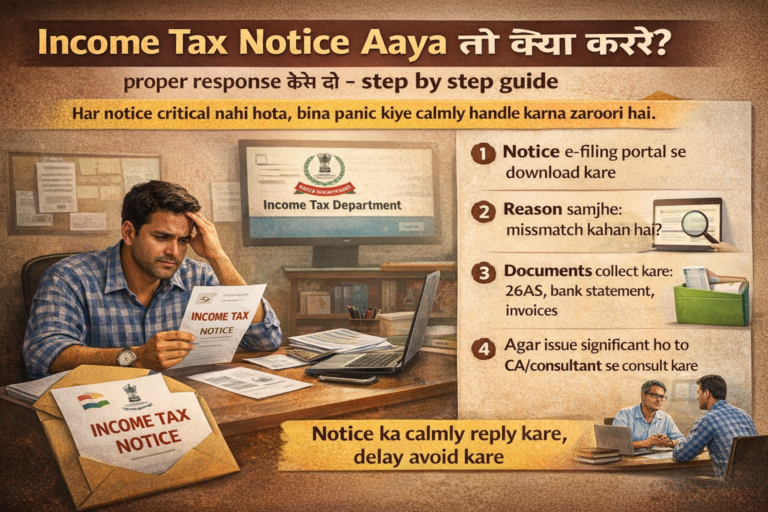
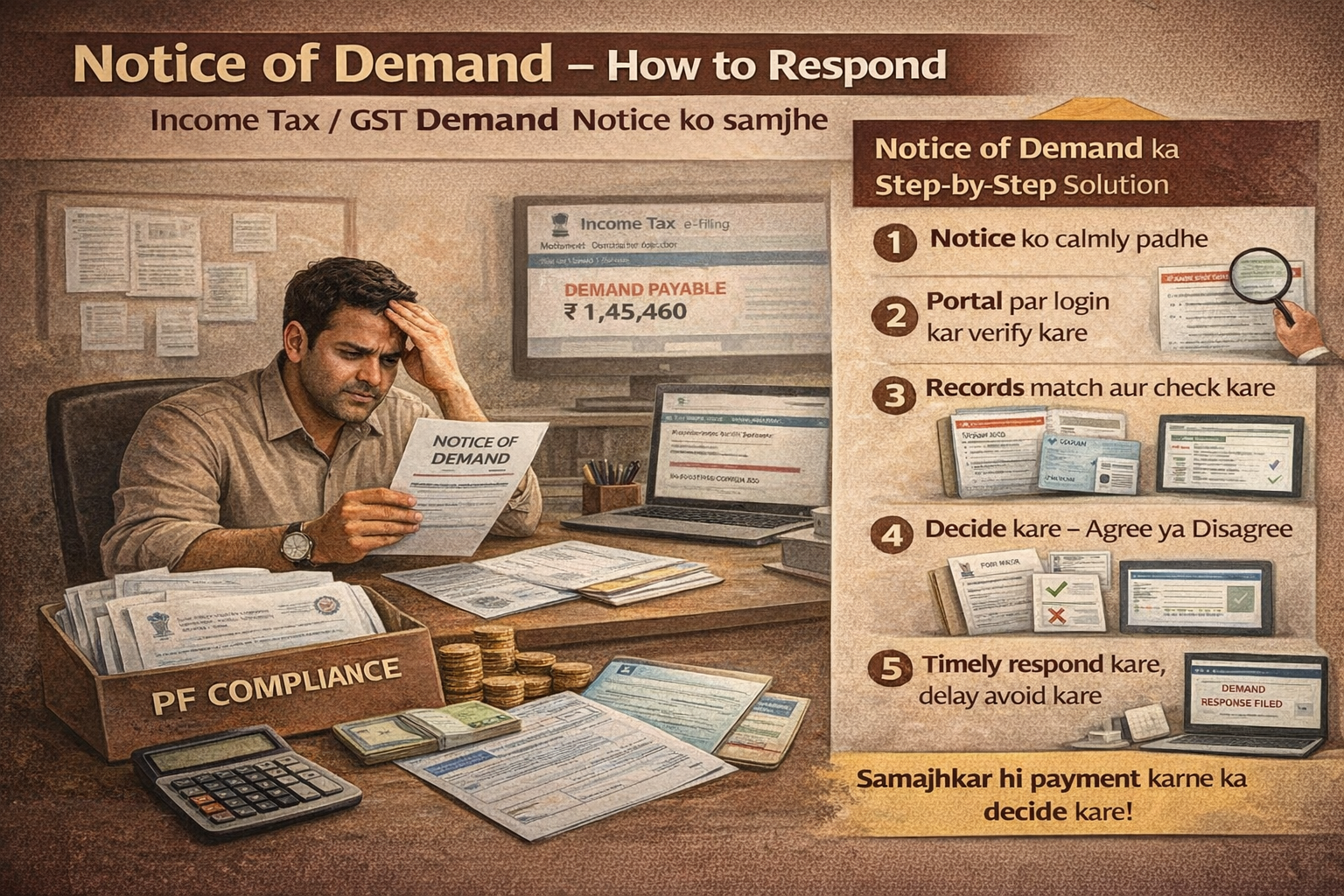
स्टेप 1: नोटिस को कूली पढ़ें
सबसे पहले सेक्शन नंबर, असेसमेंट ईयर/टैक्स पीरियड और अमाउंट चेक करें। ये तीन चीजें समझ लेना बहुत इम्पॉर्टेंट होता है।
स्टेप 2: पोर्टल पर लॉगिन करके डिटेल्स वेरिफाई करें
- इनकम टैक्स: e-Filing पोर्टल → Pending Actions → View Notices
- जीएसटी: GST पोर्टल → Services → User Services → View Notices and Orders
- डिमांड किस रीजन से है, यहां क्लियर होता है
स्टेप 3: रिकॉर्ड्स मैच करें
- फॉर्म 26AS, AIS
- रिटर्न कॉपी (ITR / GSTR-1, GSTR-3B)
- चालान डिटेल्स
- सपोर्टिंग डॉक्यूमेंट्स (TDS सर्टिफिकेट, इनवॉइसेज)
स्टेप 4: डिसाइड करें – एग्री या डिसएग्री
| अगर डिमांड करेक्ट है | अगर डिमांड इनकरेक्ट है |
|---|---|
| पेमेंट करें | रिस्पांस फाइल करें (Rectification या Appeal) |
स्टेप 5: रिस्पांस टाइम पर फाइल करें
डिले अवॉयड करें, वरना इंटरेस्ट और पेनल्टी बढ़ सकती है।
7. इनकम टैक्स डिमांड नोटिस के लिए रिस्पांस ऑप्शन्स (Response Options for Income Tax Demand Notice)
ऑप्शन 1: अगर डिमांड सही है – पेमेंट करें
e-Filing पोर्टल पर जाएं → Pending Actions → Response to Outstanding Tax Demand → Select Correct → Pay Tax
पेमेंट के बाद सेक्शन 156 डिमांड नोटिस क्लोज हो जाएगा।
ऑप्शन 2: अगर डिमांड गलत है – रेक्टिफिकेशन या डिसएग्री
रेक्टिफिकेशन (सेक्शन 154) के लिए:
- e-Filing पोर्टल पर जाएं → Pending Actions → Response to Outstanding Tax Demand
- “Disagree” सेलेक्ट करें
- रीजन सेलेक्ट करें (जैसे TDS क्रेडिट अलरेडी क्लेम किया हुआ है, रिटर्न अलरेडी फाइल है)
- सपोर्टिंग डॉक्यूमेंट्स अपलोड करें (TDS सर्टिफिकेट, 26AS, ITR-V)
अपील (Appeal) के लिए:
- अगर डिमांड ₹50,000 से अधिक है तो CIT (Appeals) के पास अपील कर सकते हैं
- अपील का टाइम लिमिट: डिमांड नोटिस की डेट से 30 दिन
8. जीएसटी डिमांड नोटिस के लिए रिस्पांस ऑप्शन्स (Response Options for GST Demand Notice)
ऑप्शन 1: अगर डिमांड सही है – पेमेंट करें
GST पोर्टल पर जाएं → Services → Payments → Create Challan → डीआरसी-03 के अनुसार अमाउंट पे करें
पेमेंट के बाद फॉर्म DRC-03 (पेमेंट वाउचर) जनरेट होगा।
ऑप्शन 2: अगर डिमांड गलत है – रेक्टिफिकेशन (सेक्शन 161)
डीआरसी-01बी/सी नोटिस के लिए: पोर्टल पर जाएं → Services → User Services → View Notices and Orders → डीआरसी-01बी खोलें → “क्लिक टू सबमिट रिस्पांस” → रीजन बताएं → सपोर्टिंग डॉक्यूमेंट्स अपलोड करें
डीआरसी-07 नोटिस (असेसमेंट ऑर्डर) के लिए: अपील करना होगा (सेक्शन 107) → अपील फॉर्म फॉर्म GST APL-01
9. इनकम टैक्स vs जीएसटी डिमांड – तुलना (Income Tax vs GST Demand – Comparison)
| पैरामीटर | इनकम टैक्स डिमांड | जीएसटी डिमांड |
|---|---|---|
| नोटिस फॉर्म | नोटिस ऑफ डिमांड (सेक्शन 156) | डीआरसी-07 (असेसमेंट के बाद) / डीआरसी-01बी (मिसमैच) |
| पेमेंट का प्रोसेस | e-Filing पोर्टल से चालान बनाकर | जीएसटी पोर्टल से चालान बनाकर |
| रेक्टिफिकेशन | सेक्शन 154 (करदाता या आईटीओ की गलती पर) | सेक्शन 161 (विभाग की गलती पर) |
| अपील का टाइम लिमिट | 30 दिन (CIT Appeals) | 3 महीने (First Appellate Authority) |
| अपील फॉर्म | फॉर्म 35 | फॉर्म GST APL-01 |
| प्री-डिपॉजिट की जरूरत | अधिकार के अनुसार 10% (कुछ अपीलों में) | अधिकार के अनुसार 10% (डीआरसी-07 के लिए) |
10. डिमांड नोटिस इग्नोर करने पर क्या होता है (Consequences of Ignoring Demand Notice)
| स्टेज | क्या होता है |
|---|---|
| इनिशियल स्टेज | रिमाइंडर आता है |
| सेकंड स्टेज | डिमांड पोर्टल पर आउटस्टैंडिंग दिखती रहती है |
| थर्ड स्टेज | फ्यूचर रिफंड्स एडजस्ट हो सकते हैं |
| फाइनल स्टेज | रिकवरी प्रोसीडिंग्स (बैंक अकाउंट फ्रीज, प्रॉपर्टी अटैच) |
इग्नोर करने से प्रॉब्लम खत्म नहीं होती, बढ़ती है।
11. डिमांड नोटिस के प्रोस और कॉन्स – रियल व्यू (Pros and Cons of Demand Notice)
प्रोस (फायदे):
- सिस्टम मिसमैचेस हाइलाइट हो जाते हैं
- करेक्शन का चांस मिलता है
- जल्दी रिस्पांस देने पर इंटरेस्ट बढ़ने से बच सकते हैं
कॉन्स (नुकसान):
- टाइम और एफर्ट लगता है
- प्रोफेशनल हेल्प की कॉस्ट भी लग सकती है
टाइमली रिस्पांस देने से सिचुएशन कंट्रोल में रहती है।
12. कब सिचुएशन सीरियस हो सकती है (When Situation Can Become Serious)
- डिमांड अमाउंट बड़ा हो
- मल्टीपल इयर्स की डिमांड हो
- पहले से नोटिसेस इग्नोर किए गए हों
ऐसे केसेस में प्रोफेशनल एडवाइस लेना सेफर होता है।
शॉर्ट कॉशन: पुरानी डिमांड्स को इग्नोर करना फ्यूचर रिफंड्स और लोन प्रोसेसिंग में प्रॉब्लम क्रिएट कर सकता है।
13. कब तुरंत पेमेंट करना सही होता है (When Immediate Payment is the Right Choice)
- कैलकुलेशन साफ तौर पर करेक्ट हो
- लेट फीस या इंटरेस्ट स्मॉल अमाउंट का हो
- रिकॉर्ड्स मैच कर रहे हों
ऐसे केसेस में डिस्प्यूट करने से बेहतर पेमेंट करके मैटर क्लोज करना प्रैक्टिकल होता है।
14. अक्सर पूछे जाने वाले सवाल (FAQs)
प्रश्न 1: क्या डिमांड नोटिस आने का मतलब स्क्रूटनी है?
उत्तर: नहीं। डिमांड नोटिस और स्क्रूटनी अलग चीजें हैं। डिमांड अक्सर सिस्टम एडजस्टमेंट्स की वजह से भी आती है। स्क्रूटनी एक अलग प्रोसेस है जिसमें रिटर्न की डिटेल्ड जांच होती है।
प्रश्न 2: क्या पार्ट पेमेंट कर सकते हैं?
उत्तर: कुछ केसेस में पॉसिबल होता है, पर सिचुएशन और डिपार्टमेंट के रूल्स पर डिपेंड करता है। बेस्ट है प्रोफेशनल से कंसल्ट करें।
प्रश्न 3: क्या अकाउंटेंट ऑटोमैटिकली डिमांड रिजॉल्व कर देता है?
उत्तर: अगर अकाउंटेंट को नोटिस टाइम पर मिले और डॉक्यूमेंट्स अवेलेबल हों, तभी प्रॉपरली हैंडल हो पाता है। इसलिए करदाता को भी ट्रैक रखना चाहिए।
प्रश्न 4: क्या डिमांड नोटिस के बाद अपील कर सकते हैं?
उत्तर: हां। इनकम टैक्स के लिए CIT (Appeals) के पास 30 दिनों के भीतर, जीएसटी के लिए First Appellate Authority के पास 3 महीने के भीतर अपील कर सकते हैं .
प्रश्न 5: डिमांड डिसएग्री करने पर कितने दिनों में रिजॉल्यूशन आता है?
उत्तर: केस और डिपार्टमेंट के वर्कलोड पर डिपेंड करता है। रेक्टिफिकेशन के लिए कोई फिक्स्ड टाइमलाइन नहीं है, लेकिन जीएसटी के लिए 90 दिनों का टाइमलाइन प्रोविजन है।
प्रश्न 6: क्या पुरानी डिमांड (5-6 साल पुरानी) अब भी वसूली जा सकती है?
उत्तर: इनकम टैक्स के लिए समय सीमा 6 साल है, जीएसटी के लिए 5 साल (गैर-फ्रॉड केसेस में)। लेकिन अगर नोटिस टाइम पर नहीं डिस्पोज हुआ तो रिकवरी प्रोसीडिंग्स अभी भी संभव है।
15. क्विक चेकलिस्ट (Quick Checklist)
- [ ] नोटिस को ध्यान से पढ़ें – सेक्शन, असेसमेंट ईयर/पीरियड, अमाउंट चेक करें
- [ ] पोर्टल पर लॉगिन करें और डिमांड डिटेल्स वेरिफाई करें
- [ ] फॉर्म 26AS/AIS या GSTR-2B अपने रिकॉर्ड्स से मिलाएं
- [ ] डिसाइड करें – डिमांड सही है या गलत
- [ ] सही हो तो पेमेंट करें
- [ ] गलत हो तो रेक्टिफिकेशन या अपील का रिस्पांस फाइल करें
- [ ] रिस्पांस टाइम पर फाइल करें – डिले अवॉयड करें
16. निष्कर्ष (Conclusion)
राकेश ने जब डिमांड डिटेल्स प्रॉपरली चेक की, तो पता चला कि टीडीएस क्रेडिट मिसमैच की वजह से डिमांड जनरेट हुई थी। अकाउंटेंट ने करेक्शन फाइल किया और डिमांड नल हो गई। अगर राकेश पैनिक में तुरंत पेमेंट कर देता, तो अननेसेसरी पैसा चला जाता।
नोटिस ऑफ डिमांड एक सिग्नल है, फाइनल जजमेंट नहीं।
इसे कूली समझना और वेरिफाई करना सबसे इम्पॉर्टेंट स्टेप है। हर केस की फैक्ट्स अलग होती हैं, इसलिए डॉक्यूमेंट्स मैच करना और टाइमली रिस्पांस देना ही सेफेस्ट अप्रोच होता है।
🚨 कानूनी अस्वीकरण (Legal Disclaimer)
यह लेख केवल सूचनात्मक और शैक्षिक उद्देश्यों के लिए है। यह Income Tax Act, 1961 और CGST Act, 2017 के तहत डिमांड नोटिस का एक सामान्य अवलोकन प्रदान करता है, जो 2026 तक लागू प्रावधानों पर आधारित है। कानून, नियम, समय-सीमाएं, नोटिस के प्रकार और प्रक्रियाएं बिना किसी पूर्व सूचना के बदल सकती हैं। यह सामग्री पेशेवर कानूनी या कर सलाह का विकल्प नहीं है। करदाताओं को अपनी विशिष्ट स्थिति के अनुरूप सलाह के लिए एक योग्य चार्टर्ड अकाउंटेंट या टैक्स कंसल्टेंट से परामर्श करना चाहिए और सबसे वर्तमान कानूनी स्थिति के लिए आधिकारिक Income Tax e-Filing पोर्टल, GST पोर्टल और अधिसूचनाओं का संदर्भ लेना चाहिए।

Vivek Bhargava is a business and legal content researcher who writes simplified guides on Indian startup laws, taxation, and compliance requirements. His goal is to help entrepreneurs understand complex legal topics in a clear and practical way.
The information published on this website is based on official government notifications and publicly available legal resources.
Disclaimer: The content provided here is for informational purposes only and does not constitute legal advice. Readers are advised to consult a qualified professional for specific legal matters.