GST Audit Process – Beginners Guide (India)- Hindi
Shuruaat ek real situation se
Vivek ko lagta tha ki GST audit sirf bade companies ke liye hota hai.
Phir ek din accountant ne casually bola,
“Agar turnover limit cross hui, to GST audit bhi lagega.”
Bas yahin se Vivek ne GST audit ko seriously samajhna shuru kiya.
Agar aap bhi GST registered ho aur audit word sunte hi tension ho jaati hai, to ye guide aapke liye hai.
GST Audit kya hota hai
GST audit ek official verification process hai jisme:
- Aapke books of accounts
- GST returns
- Invoices
- Tax payments
ko check kiya jaata hai, taaki confirm ho sake ki:
- GST correctly calculate hua
- ITC sahi claim hua
- Koi tax short payment ya excess refund to nahi hua
GST Audit ka purpose kya hota hai
GST audit ka main aim hota hai:
- Tax compliance ensure karna
- Revenue leakage rokna
- Fraud aur wrong ITC detect karna
- Genuine taxpayers ko clear picture dena
Simple words me: government sirf verify karti hai, punish nahi.
GST Audit kisko apply hota hai
Turnover based audit
Agar kisi financial year me:
- Business turnover prescribed limit se zyada ho
to GST audit applicable hota hai.
Note: Audit rules time-to-time change hote rehte hain, isliye updated threshold check karna zaruri hota hai.
GST Audit ke types
1. Taxpayer initiated audit
Business owner apni taraf se audit karwata hai taaki errors identify ho jaayein.
2. Departmental audit
GST department audit conduct karti hai, generally notice ke through.
3. Special audit
Jab department ko lagta hai ki:
- ITC misuse hua hai
- Valuation complex hai
tab special audit order hota hai.
GST Audit process – Step by Step
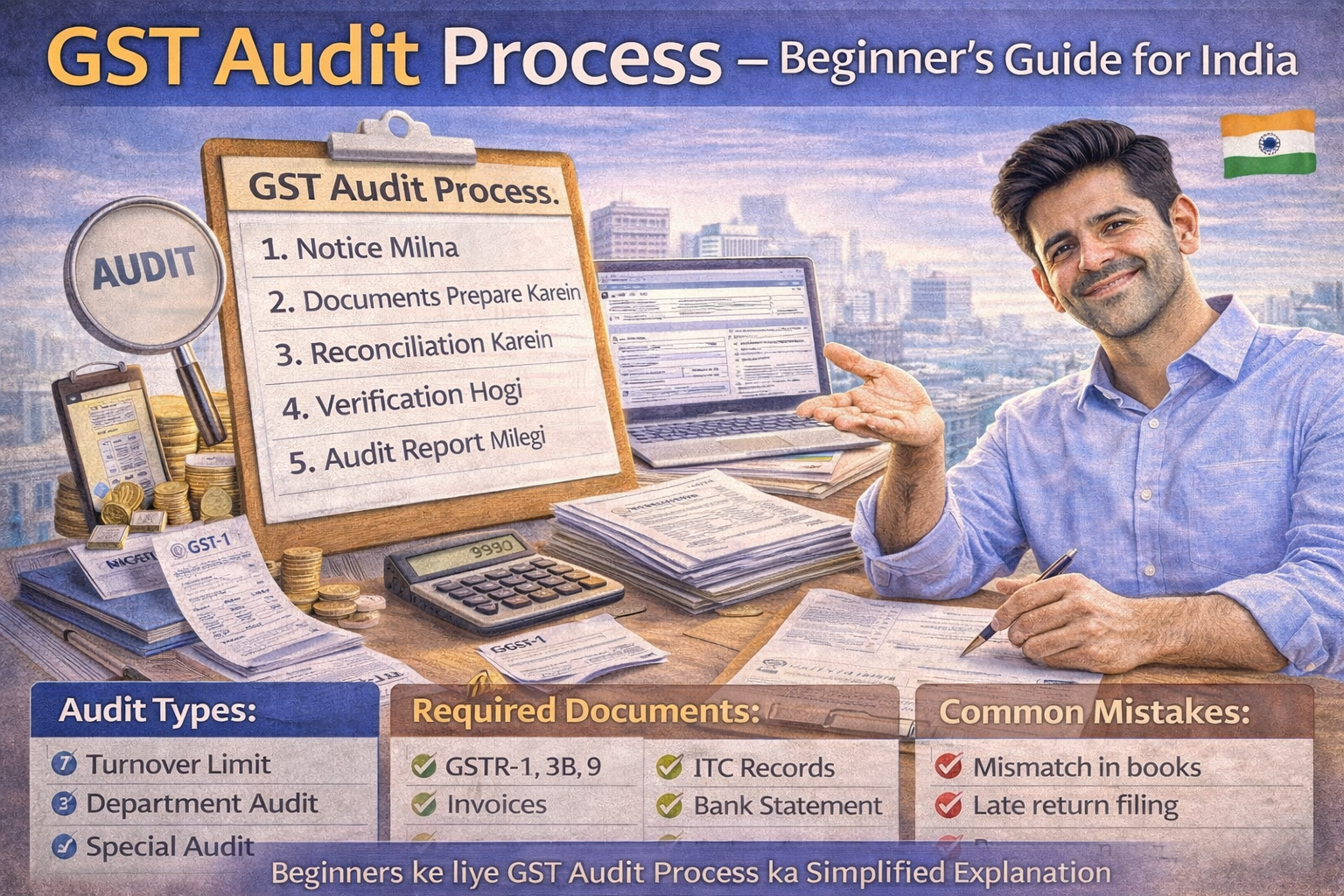
Step 1: Audit notice receive hona
GST department email ya portal ke through notice bhejti hai, jisme:
- Audit period
- Documents list
- Response timeline
mention hoti hai.
Step 2: Documents preparation
Aapko ready rakhne hote hain:
- Sales & purchase registers
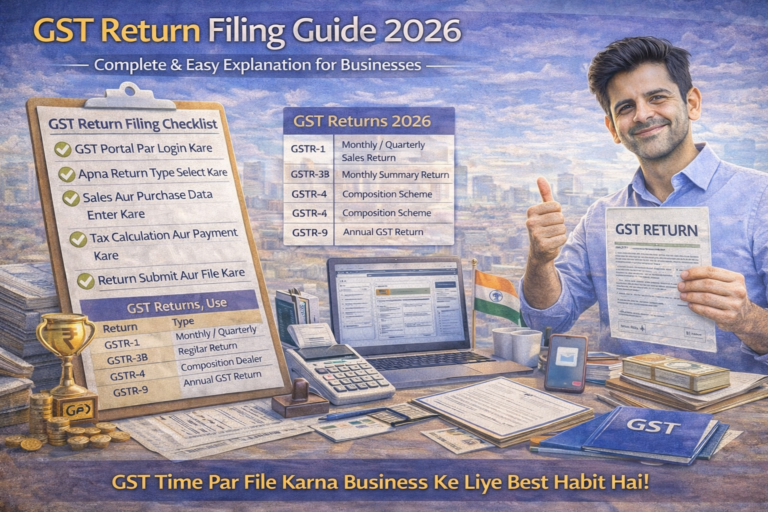
- GST returns (GSTR-1, 3B, 9)
- ITC workings
- Bank statements
- E-way bills
Step 3: Reconciliation
Returns aur books ka matching hota hai:
- Turnover reconciliation
- ITC reconciliation
- Tax payment verification
Yahin par zyada issues pakde jaate hain.
Step 4: Audit verification
Auditor ya department:
- Records check karti hai
- Clarifications maang sakti hai
- Additional documents request kar sakti hai
Step 5: Audit report
Audit complete hone ke baad:
- Audit findings share hoti hain
- Short payment ya excess ITC identify hota hai
- Further action (if any) mention hota hai
GST Audit ke liye required documents
| Category | Documents |
|---|---|
| Returns | GSTR-1, 3B, 9 |
| Accounts | Balance sheet, P&L |
| ITC | Invoice wise ITC register |
| Others | Bank statement, E-way bills |
GST Audit me common mistakes
- Books aur returns ka mismatch
- Wrong ITC claim
- Late return filing
- Missing invoices
- Personal expenses ko business me show karna
Ye mistakes GST notice ka reason ban sakti hain.
GST Audit se kaise safe rahein
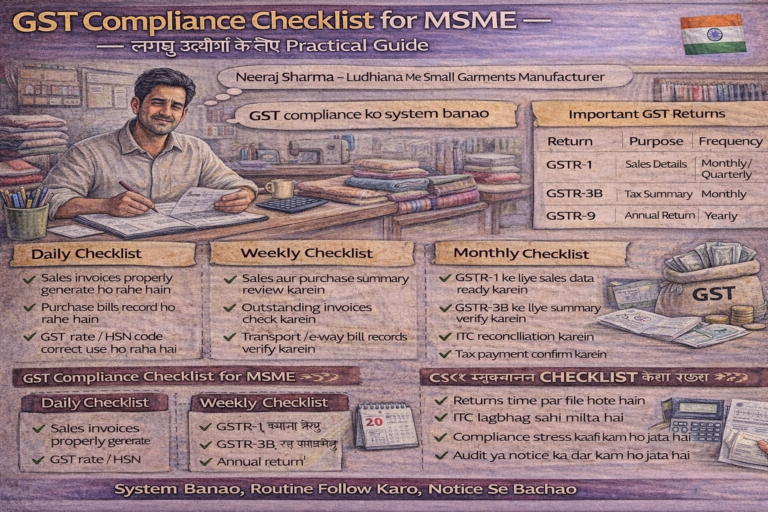
- Monthly reconciliation karein
- ITC sirf eligible invoices par claim karein
- Returns time par file karein
- Proper documentation maintain karein
- Professional CA ya GST expert ki help lein
Vivek ne ye habits develop ki aur audit smoothly clear ho gaya.
GST Audit ka impact business par
- Transparency improve hoti hai
- Compliance strong hota hai
- Future notices ka risk kam hota hai
- Business credibility badhti hai
Final conclusion
GST audit koi darne wali cheez nahi hai.
Agar records clean hain aur compliance regular hai, to audit ek routine verification ban jaata hai.
Simple rule yaad rakho:
Books sahi rakho, returns time par file karo, audit tension nahi dega.

Vivek Bhargava is a business and legal content researcher who writes simplified guides on Indian startup laws, taxation, and compliance requirements. His goal is to help entrepreneurs understand complex legal topics in a clear and practical way.
The information published on this website is based on official government notifications and publicly available legal resources.
Disclaimer: The content provided here is for informational purposes only and does not constitute legal advice. Readers are advised to consult a qualified professional for specific legal matters.