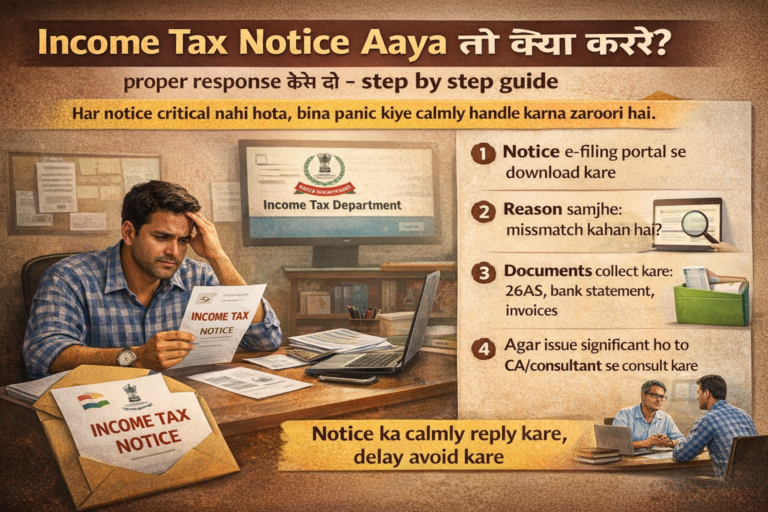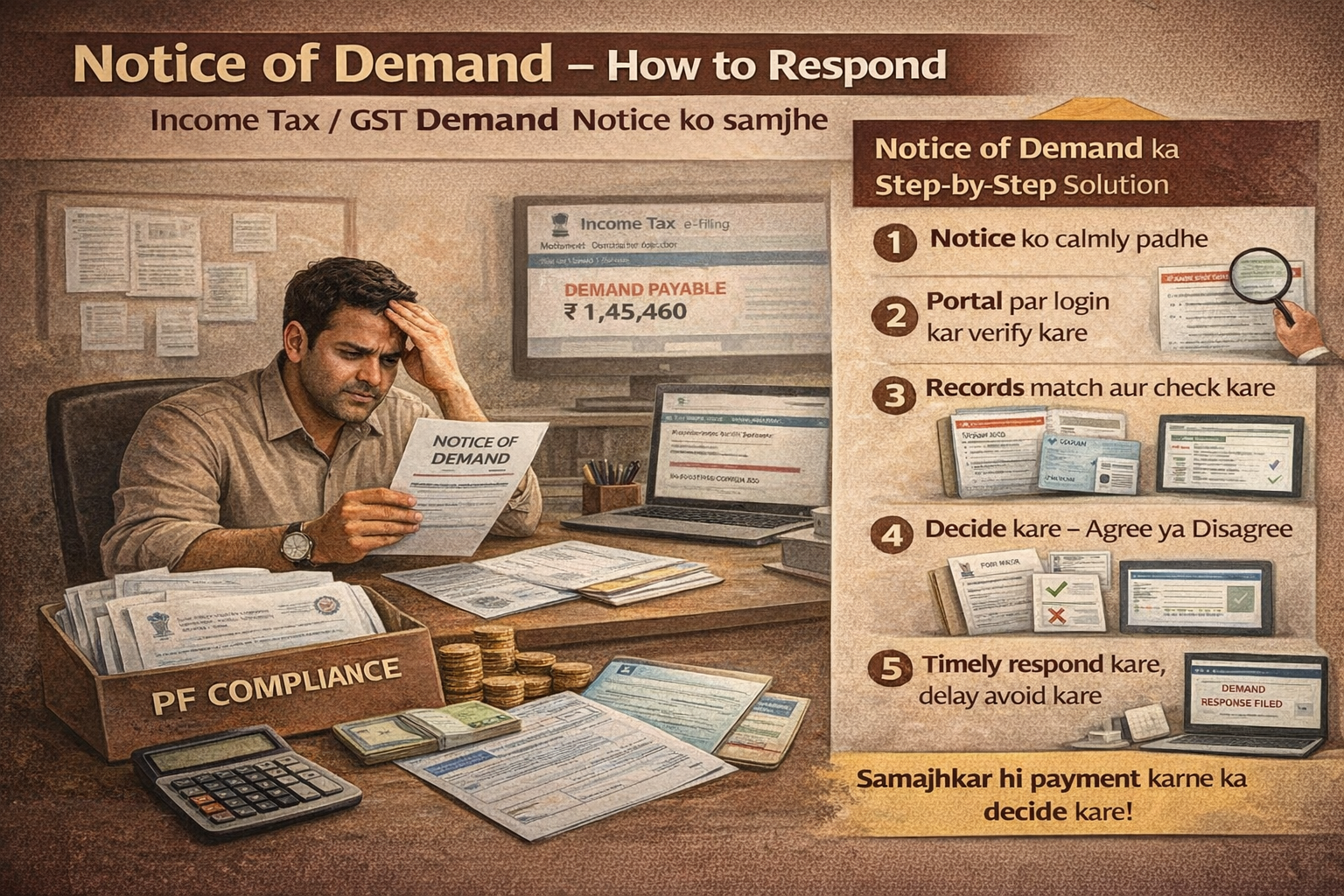
Notice of Demand – How to Respond (Income Tax / GST Demand Notice ko Practical Tarike se Kaise Handle Kare)
Ek real situation jo bahut log face karte hain
Rakesh Surat me ek small textile trading ka business chalata hai. Ek din uske email par ek message aaya:
“Demand Notice – Outstanding Tax Payable.”
Email dekhte hi Rakesh ko laga ki shayad usne koi badi galti kar di hai. Amount bhi kaafi bada lag raha tha. Accountant ko call kiya, par accountant busy tha aur bola shaam ko baat karte hain.
Poora din Rakesh tension me raha. Usko ye bhi samajh nahi aa raha tha ki demand notice ka matlab turant payment karna hota hai ya pehle check karna chahiye.
Sach ye hai ki Notice of Demand aana unusual nahi hai, aur har demand final ya correct ho, ye zaroori nahi hota.
Demand Notice aane par sabse bada problem kya hota hai
Ground reality me business owners aur individuals dono ek hi confusion face karte hain:
Notice language technical hoti hai
Amount dekhkar panic ho jata hai
Portal samajhna mushkil lagta hai
Accountant par total dependence hoti hai
Aur sabse common mistake ye hoti hai ki log bina samjhe payment kar dete hain ya notice ignore kar dete hain.
Dono hi situations me loss ho sakta hai.
Simple shabdon me samjhe: Notice of Demand kya hota hai
Simple shabdon me bole to Notice of Demand ek official communication hota hai jisme department ye batata hai ki:
Aap par kuch tax, interest ya penalty payable hai.
Ye notice Income Tax Department se bhi aa sakta hai aur GST Department se bhi.
Important baat ye hai ki demand ka matlab ye nahi hota ki amount final hi hai. Kabhi kabhi mismatch, calculation error ya missing credit ki wajah se bhi demand generate ho jati hai.
Demand Notice kin reasons se aata hai
Practical experience me kuch common reasons ye hote hain:
TDS credit mismatch
Return filing error
Interest auto-calculation
Late fee adjustment
ITC mismatch (GST cases me)
Kai baar system-generated demand hoti hai jise verify karna zaroori hota hai.
Law kya kehta hai vs Practical Reality
Law kehta hai ki demand notice milne par taxpayer ko:
Specified time me response dena hota hai
Ya payment karna hota hai
Practical reality me:
Notices kabhi kabhi incorrect bhi hote hain
Data mismatch AIS, 26AS ya GST portal me hota hai
Old returns revise karne padte hain
Isliye blindly payment karna sahi approach nahi hota.
Notice of Demand milne par kya kare – Step by Step
Step 1: Notice ko calmly padhe
Sabse pehle section number, assessment year aur amount check kare.
Ye teen cheeze samajh lena bahut important hota hai.
Step 2: Portal par login karke details verify kare
Income Tax ya GST portal par demand details available hoti hain.
Demand kis reason se hai, ye wahan clear hota hai.
Step 3: Records match kare
Form 26AS
AIS
Return copy
Challan details
In documents ko match kare.
Step 4: Decide kare – Agree ya Disagree
Agar demand correct hai to payment kare.
Agar incorrect hai to response file kare.
Step 5: Response time par file kare
Delay avoid kare, warna interest aur penalty badh sakti hai.
Online aur Offline process me difference
Online side me:
Notice dekhna
Response file karna
Payment karna
Offline side me:
Reconciliation
Documents verify karna
Explanation prepare karna
Bahut log online step ko hi main kaam samajhte hain, jabki asli kaam verification hota hai.
Demand Notice ignore karne par kya hota hai
Initial stage me reminder aata hai.
Phir demand outstanding show hoti rehti hai.
Future refunds adjust ho sakte hain.
Extreme cases me recovery proceedings start ho sakti hain.
Ye process time leta hai, par ignore karna problem ko khatam nahi karta.
Demand Notice ke Pros aur Cons – Real View
Demand notice ka ek positive angle ye hai ki system mismatches highlight ho jate hain aur correction ka chance milta hai.
Negative side ye hai ki time aur effort lagta hai. Kabhi kabhi professional help ki cost bhi lagti hai.
Par ek important reality ye hai ki timely response dene se situation control me rehti hai.
Ek practical sawal jo log aksar poochte hain
Kya demand notice aane ka matlab scrutiny hai?
Nahi. Demand notice aur scrutiny alag cheezein hain. Demand often system adjustments ki wajah se bhi aati hai.
Kya part payment kar sakte hain?
Kuch cases me possible hota hai, par situation aur department ke rules par depend karta hai.
Kya accountant automatically demand resolve kar deta hai?
Agar accountant ko notice time par mile aur documents available ho, tab hi properly handle ho pata hai. Isliye taxpayer ko bhi track rakhna chahiye.
Kab situation serious ho sakti hai
Jab demand amount large ho
Jab multiple years ki demand ho
Jab notices ignore kiye gaye ho
Aise cases me professional advice lena safer hota hai.
Short caution: Old demands ko ignore karna future refunds aur loan processing me problem create kar sakta hai.
Kab turant payment karna sahi hota hai
Agar calculation clearly correct ho
Agar late fee ya interest small amount ka ho
Agar records match karte ho
Aise cases me dispute karne se better payment karke matter close karna practical hota hai.
Conclusion: Demand notice ek signal hai, final judgement nahi
Rakesh ne jab demand details properly check ki, to pata chala ki TDS credit mismatch ki wajah se demand generate hui thi. Accountant ne correction file ki aur demand null ho gayi.
Agar Rakesh panic me turant payment kar deta, to unnecessary paisa chala jata.
Notice of Demand ko calmly samajhna aur verify karna sabse important step hai. Har case ki facts alag hoti hain, isliye documents match karna aur timely response dena hi safest approach hota hai.

Vivek Bhargava is a business and legal content researcher who writes simplified guides on Indian startup laws, taxation, and compliance requirements. His goal is to help entrepreneurs understand complex legal topics in a clear and practical way.
The information published on this website is based on official government notifications and publicly available legal resources.
Disclaimer: The content provided here is for informational purposes only and does not constitute legal advice. Readers are advised to consult a qualified professional for specific legal matters.