
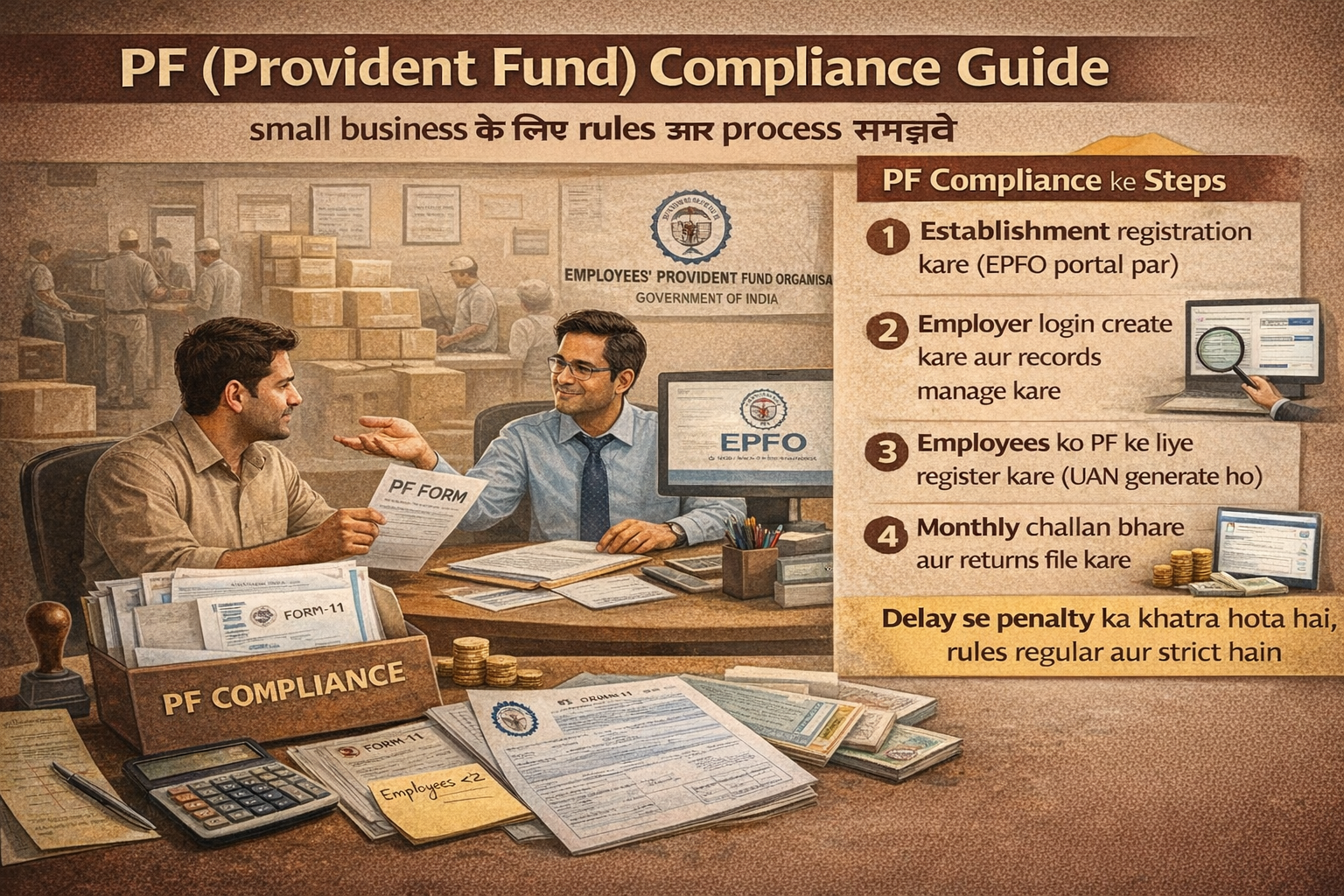
PF (Provident Fund) Compliance Guide – Small Business ke liye Practical Samajh
Ek real situation jo bahut common hai
Manoj Ghaziabad me ek small packaging unit chalata hai. Shuru me uske paas 6 workers the, sab daily wage par kaam karte the. Dheere-dheere kaam badha aur staff 15 log ho gaya.
Ek din ek purana employee bola ki “Sir PF kaat rahe ho kya?”
Manoj ko tab pata chala ki 10 se zyada employees hone par PF rules apply ho sakte hain. Accountant ne bola register karna padega, warna future me penalty aa sakti hai.
Manoj ko laga PF sirf badi factories ke liye hota hai. Par reality me bahut small businesses ko PF compliance karna padta hai, aur confusion bhi wahi se start hota hai.
PF Compliance ko lekar small businesses ko problem kyun hoti hai
Ground reality me PF ek aisa area hai jahan logon ko clarity kam hoti hai.
Kuch common problems:
Employees temporary hote hain, isliye employer ignore karta hai
Salary structure clear nahi hota
Accountant bhi kabhi late batata hai
Portal aur challan process technical lagta hai
Sabse bada issue ye hota hai ki log sochte hain jab tak notice nahi aata tab tak compliance zaroori nahi.
Par PF department ka system structured hota hai aur delay costly ho sakta hai.
Simple shabdon me samjhe: PF kya hota hai
Simple shabdon me bole to Provident Fund ek retirement saving scheme hai jisme:
Employee ki salary ka ek part deduct hota hai
Employer bhi utna hi contribute karta hai
Ye amount employee ke PF account me jama hota hai
Ye paisa long term saving hota hai jo job change ya retirement par milta hai.
PF kis par applicable hota hai – Basic Rules
General rule ye hai:
Agar establishment me 20 ya usse zyada employees hain, to PF registration mandatory ho jata hai.
Lekin practical reality me kai businesses voluntary registration bhi kar lete hain, especially jab employees demand karte hain ya clients compliance check karte hain.
Salary limit aur contribution structure
| Component | Percentage |
|---|---|
| Employee Contribution | 12% of basic salary |
| Employer Contribution | 12% of basic salary |
| EPS portion (employer side se) | 8.33% limit ke saath |
Practical note: Calculation generally basic + DA par hota hai, pura CTC par nahi.
Law kya kehta hai vs Practical Reality
Law kehta hai:
PF applicable hone par registration compulsory hai
Monthly contribution deposit karna hota hai
Returns file karne hote hain
Practical reality:
Small businesses me attendance aur salary records perfect nahi hote
Cash payments aur informal hiring hoti hai
Employee turnover high hota hai
Is wajah se PF compliance difficult lagta hai, par structured system bana diya jaye to manageable ho jata hai.
PF Compliance ke Pros aur Cons – Real View
PF ka sabse bada benefit employees ke trust me dikhta hai. Jab employees ko lagta hai ki employer PF de raha hai, to retention better hota hai.
Government tenders, large clients aur factory inspections me bhi PF compliance credibility badhata hai.
Cons ye hai ki cost badh jati hai, kyunki employer ko contribution dena padta hai. Paperwork aur monthly filing ka discipline maintain karna padta hai.
Short term me burden lagta hai, long term me structure ban jata hai.
PF Registration aur Compliance kaise kare – Step by Step
Step 1: Establishment registration
EPFO portal par establishment register kiya jata hai.
Step 2: Employer login create hota hai
Is login se monthly returns aur challan generate hote hain.
Step 3: Employees add karna
Employees ka UAN generate hota hai ya existing UAN link hota hai.
Step 4: Monthly contribution calculation
Salary ke hisaab se PF calculate hota hai.
Step 5: Challan payment aur return filing
Har month payment aur ECR filing hoti hai.
Online aur Offline process me difference
Registration aur filing process mostly online ho chuka hai EPFO portal par.
Offline side me actual kaam hota hai:
Attendance maintain karna
Salary records maintain karna
Employee documents collect karna
Agar ye groundwork weak ho, to online filing me errors aate hain.
Ek practical sawal jo log poochte hain
Kya temporary employees par bhi PF lagta hai?
Agar employee eligible category me aata hai aur salary structure PF criteria me fit hota hai, to temporary ya permanent difference matter nahi karta.
Kya employee PF se opt out kar sakta hai?
Kuch specific cases me possible hota hai jab salary threshold cross ho aur first job conditions different ho, par general rule me PF applicable ho to contribution mandatory hota hai.
Kya PF na dene par turant penalty lagti hai?
Initial delay par interest aur damages lagte hain. Long delay par inspection aur legal action tak situation ja sakti hai.
Kab PF compliance ko serious lena chahiye
Jab employee count 15–20 ke aas paas ho
Jab factory ya unit registered ho
Jab large companies ya contractors ke saath kaam ho
Aise cases me PF ignore karna risk create karta hai.
Short caution: PF liability retrospective bhi calculate ho sakti hai, jo ek saath heavy amount ban jata hai.
Common mistakes jo businesses karte hain
Employees ko informal rakha jata hai par records maintain nahi kiye jaate
Salary breakup unrealistic bana diya jata hai
PF deduction to kiya par deposit time par nahi kiya
Ye mistakes future me major issue ban sakti hain.
Conclusion: PF compliance ek expense nahi, structure hai
Manoj ne jab PF registration karwaya, to shuru me usko cost aur paperwork heavy laga. Par 1 saal baad usne notice kiya ki employees stable ho gaye, aur accounting aur payroll system organized ho gaya.
PF compliance shuru me complicated lagta hai, par process samajh kar aur monthly discipline bana kar easily manage kiya ja sakta hai.
Har business ki situation alag hoti hai, isliye employee strength, salary structure aur growth plans dekh kar decision lena practical approach hota hai.

Vivek Bhargava is a business and legal content researcher who writes simplified guides on Indian startup laws, taxation, and compliance requirements. His goal is to help entrepreneurs understand complex legal topics in a clear and practical way.
The information published on this website is based on official government notifications and publicly available legal resources.
Disclaimer: The content provided here is for informational purposes only and does not constitute legal advice. Readers are advised to consult a qualified professional for specific legal matters.