GST Composition Scheme Guide -Simple Explanation for Small Businesses
Ek chhoti si real baat se shuruaat
Ramesh ji ka kirana store hai. Sales steady hai, GST registration bhi hai, lekin har month returns, invoices aur compliance ka pressure unke liye headache ban gaya tha.
Ek din unke accountant ne bola,
“Composition Scheme dekhiye, aapke jaise small business ke liye hi bani hai.”
Agar aap bhi chhota business chala rahe ho aur GST compliance se pareshan ho, to ye GST Composition Scheme Guide aapke liye hai.
GST Composition Scheme kya hai
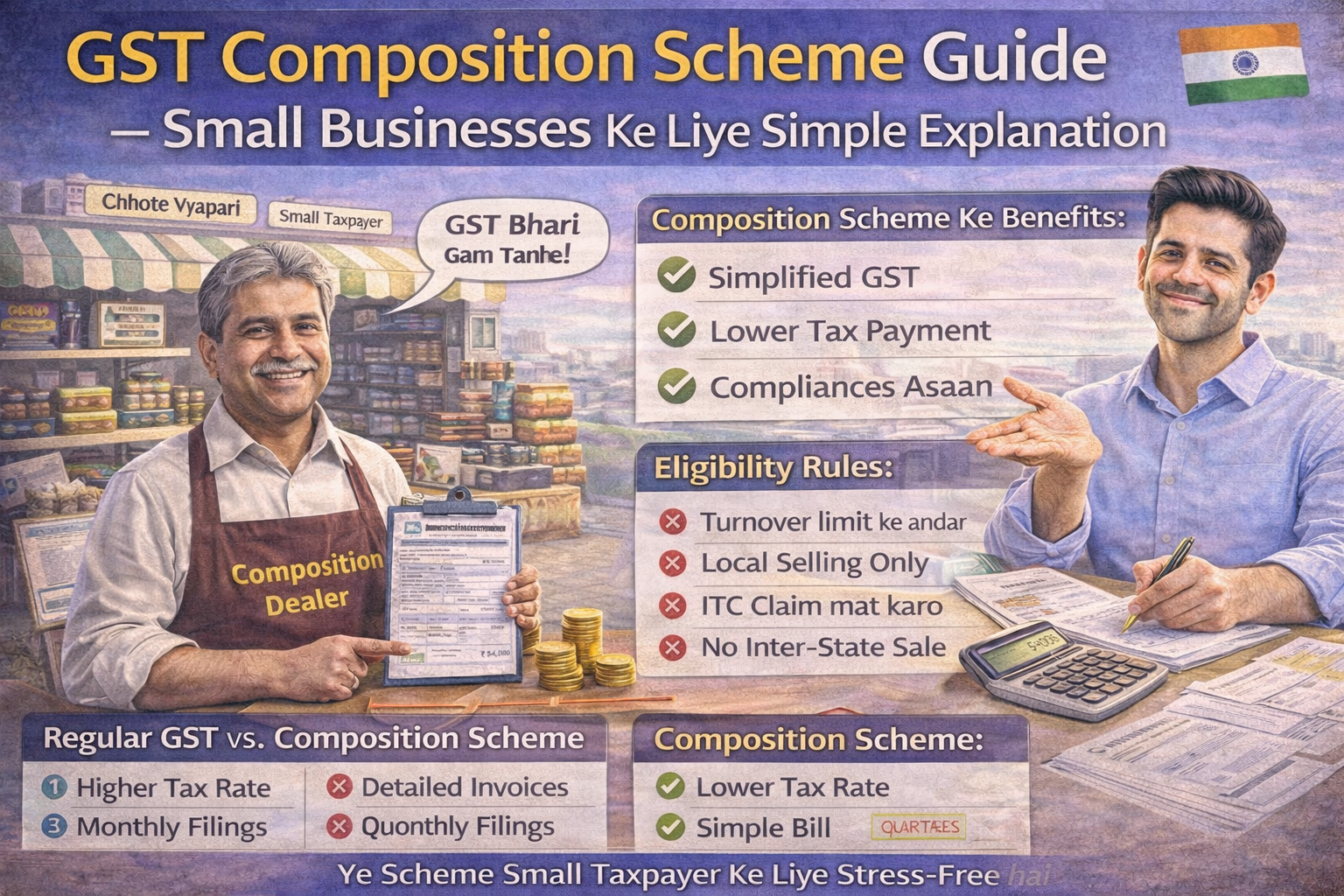
GST Composition Scheme ek simplified GST scheme hai jo small taxpayers ke liye design ki gayi hai.
Is scheme ke under business owner:
- Kam GST rate pay karta hai
- Simple return file karta hai
- Compliance burden kam ho jaata hai
Simple words me, ye scheme un logon ke liye hai jo GST simple rakhna chahte hain.
GST Composition Scheme ka fayda kisko milta hai
Composition Scheme mainly in businesses ke liye hoti hai:
- Small traders
- Manufacturers
- Restaurants (non-AC / non-liquor)
- Local service providers (limited cases)
Ye scheme un logon ke liye best hai jo:
- Local customers ko sell karte hain
- Inter-state supply nahi karte
- Badi GST compliance nahi chahte
GST Composition Scheme ke eligibility rules
Aap Composition Scheme choose kar sakte ho agar:
- Annual turnover prescribed limit ke andar ho
- Business India ke andar operate karta ho
- Inter-state outward supply nahi hoti
- E-commerce platforms (Amazon, Flipkart) par sale nahi hoti
- ITC claim nahi karna chahte
Eligibility rules ko ignore karna future me penalty ka reason ban sakta hai.
GST Composition Scheme ke tax rates
| Business Type | GST Rate (Approx) |
|---|---|
| Traders | 1% |
| Manufacturers | 1% |
| Restaurants | 5% |
| Service providers (special category) | Limited rate |
Note: Composition dealer customer se GST alag se collect nahi kar sakta.
Composition Scheme ke major benefits
1. Simple compliance
- Monthly returns nahi
- Limited filings
- Easy accounting
2. Lower tax liability
Regular GST ke comparison me tax burden kam hota hai.
3. Peace of mind
Small businesses ke liye ye scheme stress kam kar deti hai.
Ramesh ji ke case me ye sabse bada advantage tha.
GST Composition Scheme ke disadvantages
Har cheez ke saath kuch limitations bhi hoti hain.
- ITC (Input Tax Credit) claim nahi kar sakte
- Customer ko GST charge nahi kar sakte
- Inter-state sales allowed nahi
- Business growth limited ho sakta hai
Isliye scheme choose karte waqt future plans bhi sochna zaruri hai.
GST Composition Scheme kaise opt kare
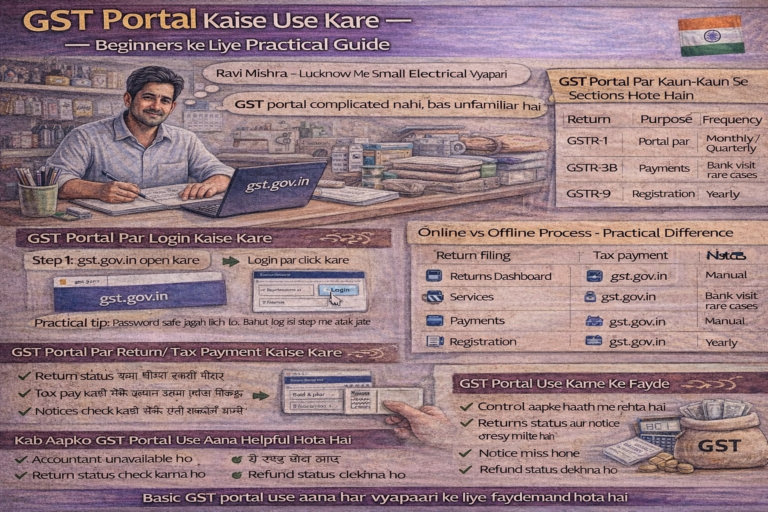
Step 1: GST portal par login kare
gst.gov.in par apne GSTIN se login kare.
Step 2: Composition Scheme option select kare
Services → Registration → Opt for Composition Scheme.
Step 3: Form submit kare
Required details fill karke declaration submit kare.
Step 4: Confirmation milega
Approval ke baad aap Composition Dealer ban jaate ho.
Composition Scheme ke under return filing
Composition dealers ko:
- Quarterly / annual simplified return file karni hoti hai
- Detailed invoice reporting nahi hoti
Ye regular GST se kaafi easy hota hai.
Composition Scheme kab choose karni chahiye
Agar aap:
- Small scale business ho
- Local market me sell karte ho
- Simple accounting chahte ho
to Composition Scheme aapke liye sahi ho sakti hai.
Agar aap:
- Business ko fast scale karna chahte ho
- B2B clients handle karte ho
- ITC ka benefit lena chahte ho
to regular GST better option hota hai.
Final conclusion
GST Composition Scheme ek shortcut nahi hai, balki small businesses ke liye ek practical solution hai.
Agar aap apni limits aur future plan samajh kar is scheme ko choose karte ho, to GST compliance bohot easy ho jaati hai.
Ramesh ji ne bhi yahi kiya, aur unka business ab bina GST tension ke smooth chal raha hai.

Vivek Bhargava is a business and legal content researcher who writes simplified guides on Indian startup laws, taxation, and compliance requirements. His goal is to help entrepreneurs understand complex legal topics in a clear and practical way.
The information published on this website is based on official government notifications and publicly available legal resources.
Disclaimer: The content provided here is for informational purposes only and does not constitute legal advice. Readers are advised to consult a qualified professional for specific legal matters.