Income Tax Notice Aaya to Kya Kare – Practical Guide for Individuals and Business Owners
Ek real situation jo bahut log face karte hain
Amit Delhi me ek small trading business chalata hai. Turnover lagbhag 35–40 lakh ke aas paas hai. Accounting ka kaam ek part-time accountant sambhalta hai, aur ITR bhi wahi file karta hai.
Ek din Amit ke email par Income Tax Department ka ek notice aaya. Subject line me likha tha: “Intimation under section…”
Amit ne email dekha aur ghabra gaya. Usko laga shayad koi badi problem ho gayi hai. Accountant ko call kiya, par accountant ne bola kal dekhte hain. Amit ki raat almost bina neend ke nikal gayi.
Sach ye hai ki Income Tax Notice milna utna rare nahi hai jitna log samajhte hain. Aur har notice ka matlab penalty ya raid nahi hota.
Is article me hum practical tarike se samjhenge ki Income Tax Notice aane par kya karna chahiye, kya nahi karna chahiye, aur kaise calmly handle kare.
Income Tax Notice se log itna darte kyun hain
Ground reality ye hai ki notice ka naam sunte hi log panic kar jaate hain.
Teen common reasons hote hain:
Pehla, tax laws complex lagte hain aur logon ko pata nahi hota notice ka matlab kya hai.
Doosra, log poori tarah accountant par depend hote hain aur khud documents ya filing samajhte nahi.
Teesra, penalties aur legal action ka fear naturally hota hai, especially jab language technical hoti hai.
Par reality ye hai ki bahut saare notices sirf information mismatch ya clarification ke liye hote hain.
Simple shabdon me samjhe: Income Tax Notice hota kya hai
Simple shabdon me bole to Income Tax Notice ek official communication hota hai jisme department aapse:
- Information maang sakta hai
- Clarification maang sakta hai
- Error correct karne ko keh sakta hai
- Ya kabhi kabhi tax demand bata sakta hai
Har notice serious violation ka signal nahi hota.
Income Tax Notices ke common types
| Notice Type | Simple Meaning |
|---|---|
| Section 143(1) | Return processing ke baad mismatch ya adjustment |
| Section 139(9) | Defective return, kuch information missing |
| Section 142(1) | Additional details ya documents maange jaate hain |
| Section 148 | Income escaping assessment ka suspicion |
Practical experience me sabse zyada notices 143(1) aur defective return wale aate hain.
Law kya kehta hai vs Practical Reality
Law kehta hai ki taxpayer ko notice ka reply prescribed time me dena hota hai.
Practical reality me problem ye hoti hai ki:
Email spam me chala jata hai
Login credentials accountant ke paas hote hain
Documents properly organized nahi hote
Notice language samajhna mushkil hota hai
Isliye delay ho jata hai, aur delay unnecessary complication create karta hai.
Income Tax Notice aane par sabse pehla step kya hona chahiye
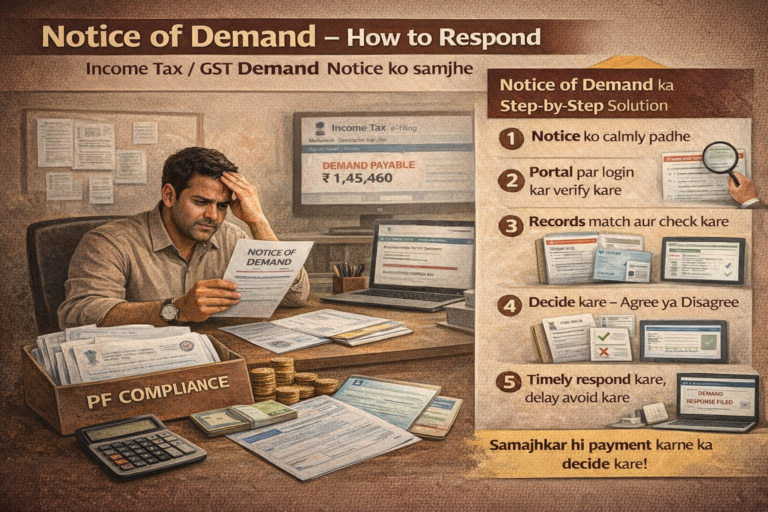
Sabse pehle notice ko calmly read kare. Sirf subject line dekh kar panic na kare.
Notice me teen important cheeze hoti hain:
Section number
Reason ya requirement
Response ki last date
Ye teen cheeze samajh lena half problem solve kar deta hai.
Income Tax Notice ka reply kaise kare – Step by Step
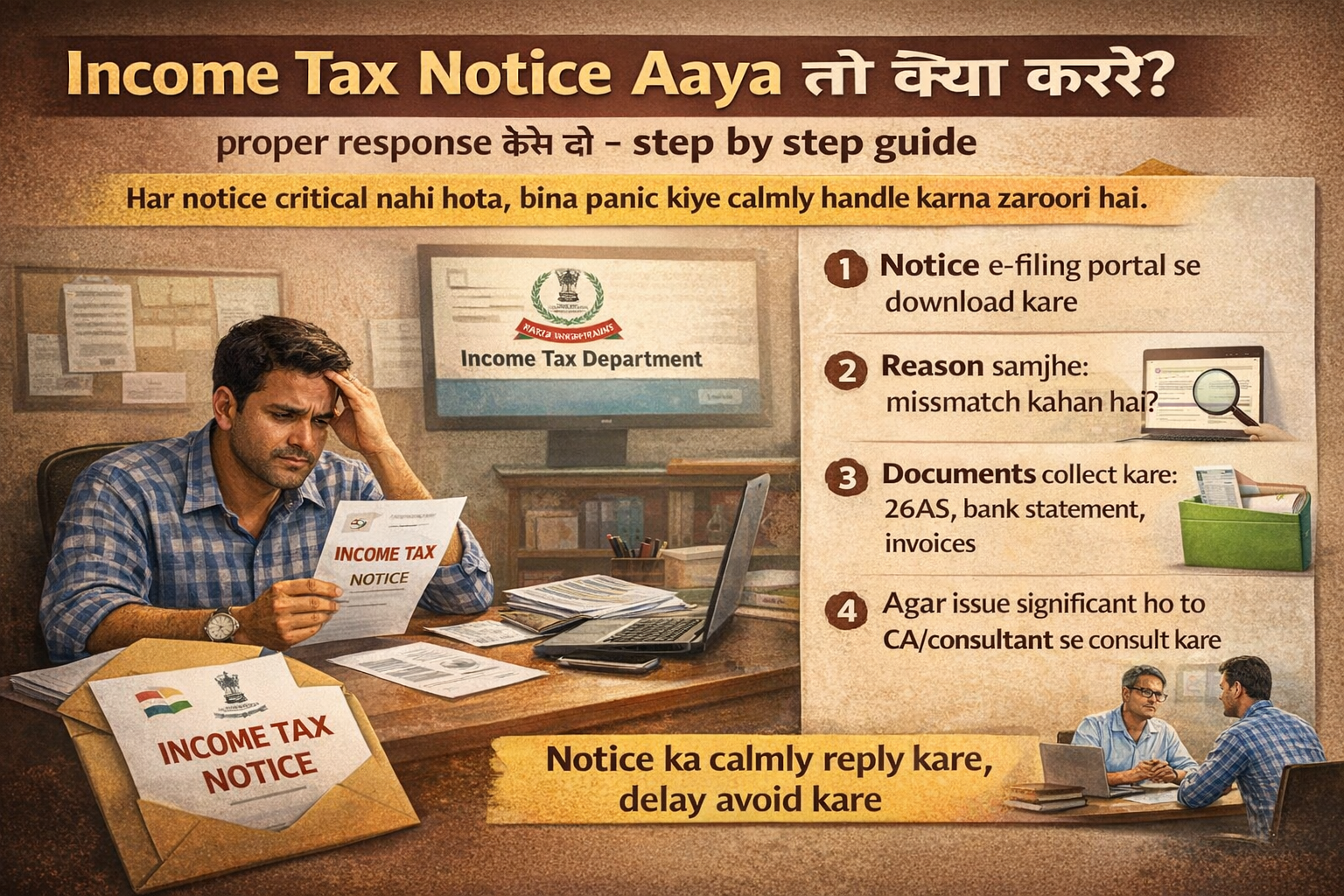
Step 1: Notice download kare
Income Tax e-filing portal par login karke notice ka full PDF download kare.
Step 2: Reason samjhe
Dekhe ki mismatch kis cheez me hai — bank interest, TDS, capital gain ya business income.
Step 3: Documents collect kare
Bank statements, Form 26AS, AIS report aur invoices ready kare.
Step 4: Professional se consult kare
Agar amount ya issue significant ho to CA ya tax consultant se discuss kare.
Step 5: Time par response file kare
Portal par response submit kare. Delay avoid kare.
Online aur Offline process me difference
Online side me notice dekhna, response submit karna aur documents upload karna hota hai.
Offline side me actual kaam hota hai — reconciliation, calculation aur explanation prepare karna.
Bahut log sirf portal login ko compliance samajhte hain, jabki groundwork offline hota hai.
Ek important sawal jo log poochte hain
Kya har notice ka reply dena zaroori hota hai?
Haan. Chahe aap agree kare ya disagree, response dena zaroori hota hai. Ignore karna worst option hota hai.
Kya notice ka matlab penalty pakka lagna hai?
Nahi. Bahut cases me sirf clarification hoti hai aur reply ke baad matter close ho jata hai.
Kya accountant sab handle kar lega to mujhe dekhne ki zaroorat nahi?
Accountant help karta hai, par responsibility taxpayer ki hi hoti hai. Basic understanding hona important hai.
Kab situation serious ho sakti hai
Agar notice me large tax demand ho
Agar multiple notices ignore ho chuke ho
Agar section 148 ya scrutiny related communication ho
Aise cases me delay ya casual approach risk create kar sakti hai.
Short caution: Notice ko postpone karna problem ko chhota nahi karta, bada karta hai.
Income Tax Notice ignore karne ke real consequences
Initial stage me reminder aata hai.
Phir best judgment assessment ho sakta hai.
Demand raise ho sakti hai.
Bank account attachment tak situation ja sakti hai extreme cases me.
Ye steps time lete hain, par process structured hota hai.
Pros aur Cons – Reality check
Notice ka ek positive angle bhi hota hai. System errors ya mismatches jaldi identify ho jate hain aur correction ka chance milta hai.
Negative side ye hai ki time, effort aur kabhi kabhi professional cost lagti hai. Business owners ke liye ye distraction lagta hai, par long term me records clean rehte hain.
Kab khud handle kar sakte hain aur kab professional help leni chahiye
Agar notice simple mismatch ka hai aur amount small hai, to basic understanding ke saath khud bhi respond kar sakte hain.
Agar capital gains, business income adjustments ya large demand involved ho, to professional advice lena safer hota hai.
Conclusion: Notice problem nahi, signal hota hai
Amit ne jab notice properly padha, to pata chala issue sirf bank interest mismatch ka tha. Accountant ne correction file ki aur matter close ho gaya.
Agar Amit panic me notice ignore kar deta, to shayad unnecessary demand raise ho jati.
Income Tax Notice aana unusual nahi hai. Important ye hai ki aap usse kaise handle karte hain — calmly, systematically aur time par.
Har case ki details alag hoti hain, isliye situation ke hisaab se decision lena aur documents organized rakhna sabse practical approach hota hai.

Vivek Bhargava is a business and legal content researcher who writes simplified guides on Indian startup laws, taxation, and compliance requirements. His goal is to help entrepreneurs understand complex legal topics in a clear and practical way.
The information published on this website is based on official government notifications and publicly available legal resources.
Disclaimer: The content provided here is for informational purposes only and does not constitute legal advice. Readers are advised to consult a qualified professional for specific legal matters.